Blog

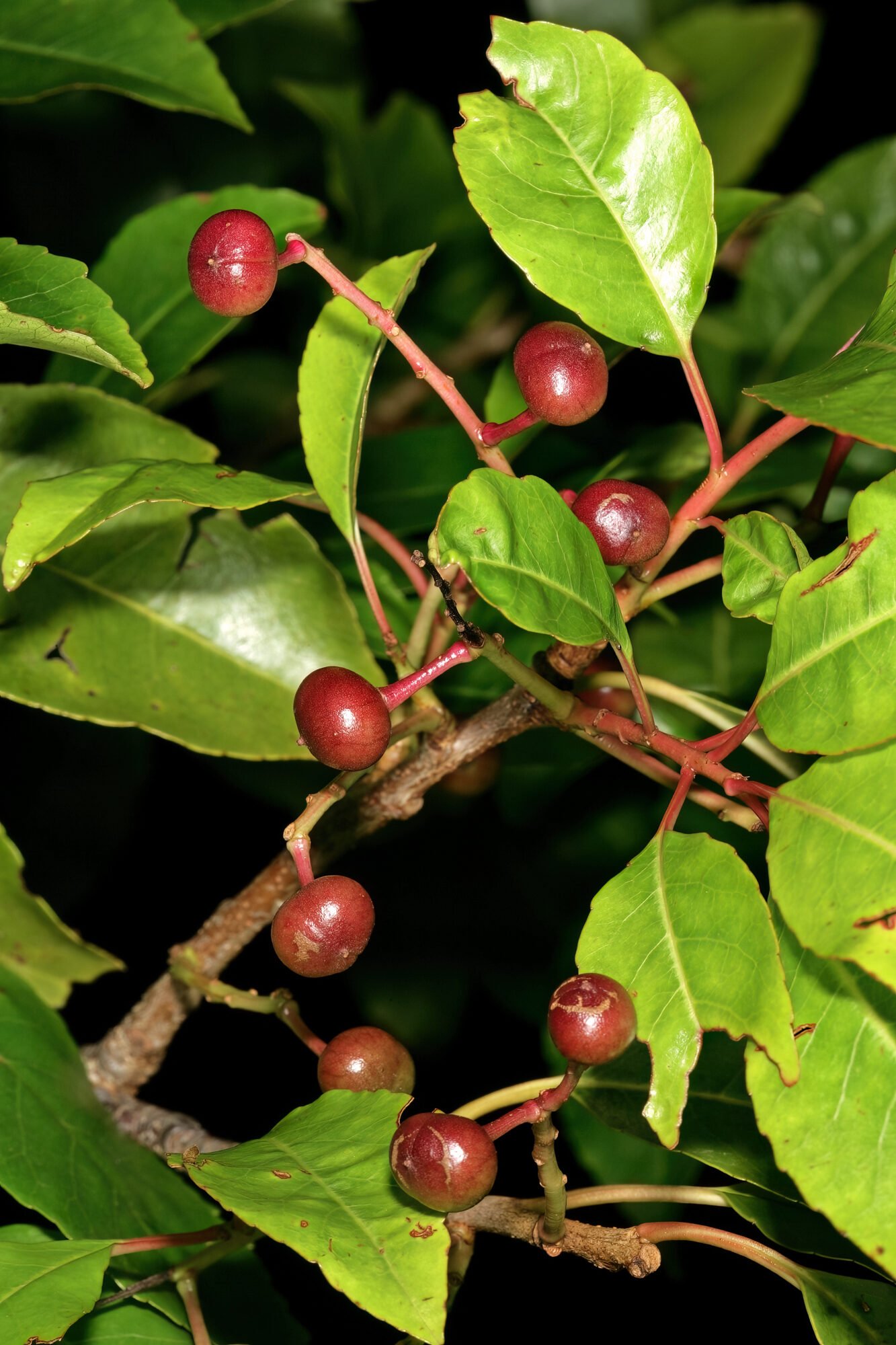
  • Prunus africana bark extract showed cytotoxicity against prostate cancer cells

    Prunus africana bark extract showed cytotoxicity against prostate cancer cells

    What the study found

    The study found that methanolic bark extract from Prunus africana was the most active of the extracts tested against C4-2 prostate cancer cells, a hormonally insensitive subline of LNCaP. The authors report that the extract caused cell death mainly through apoptosis, a programmed form of cell death.

    Why the authors say this matters

    The authors conclude that Prunus africana bark methanolic extract is a promising candidate for treating hormonally insensitive prostate cancer. They present this as relevant because the extract showed selective toxicity toward cancer cells compared with primary prostate epithelial cells.

    What the researchers tested

    The researchers extracted bark, leaf, and root samples of Prunus africana using absolute methanol or ethanol. They measured total phenolic content, total flavonoid content, and antioxidant activity, then tested cytotoxicity with an MTS cell viability assay on C4-2 cells and primary prostate epithelial cells over 6, 12, and 24 hours. Additional cellular assays were used to assess whether cell death occurred through apoptosis or necrosis.

    What worked and what didn't

    The bark methanolic extract had the highest total phenolic content, reported as 1397.33 mg GAE/g, and the lowest EC50 value, 0.10 mg/mL, which the abstract says was comparable to ascorbic acid at 0.18 mg/mL. It showed concentration-dependent cytotoxicity between 0.000025 and 0.25 mg/mL, with selective toxicity at 0.025 mg/mL toward C4-2 cells. The abstract does not report similar performance for the leaf or root extracts, beyond stating that the bark methanolic extract was the most active.

    What to keep in mind

    This was an in vitro study, so the findings come from cell-based testing rather than studies in people. The abstract does not describe in vivo results, long-term safety, or clinical effectiveness.

    • Prunus africana bark methanolic extract was the most active extract tested against C4-2 prostate cancer cells.
    • The bark methanolic extract had the highest total phenolic content, reported as 1397.33 mg GAE/g.
    • It showed the lowest EC50 value, 0.10 mg/mL, comparable to ascorbic acid at 0.18 mg/mL.
    • The extract showed concentration-dependent cytotoxicity and selective toxicity at 0.025 mg/mL toward C4-2 cells.
    • Cellular and molecular assays indicated apoptosis as the main mechanism of cell death.
  • Voters use ideological labels to infer candidates’ policy positions

    What the study found

    The study found that voters do use left-right ideological labels as a way to infer candidates’ policy positions. It also found that voters’ own ideological self-placement is often not aligned with their policy positions, especially among right-leaning individuals.

    Why the authors say this matters

    The authors conclude that these findings matter for theories of political decision-making beyond the United States. They also suggest the results have implications for substantive representation, which refers to whether elected officials reflect voters’ policy preferences, in systems with centrist or ideologically flexible parties.

    What the researchers tested

    The researchers used original experimental data from Canada, with 1,087 participants. Canada is described as a multiparty system with a fluid ideological landscape, and the study examined how voters use left-right ideological labels as shortcuts when evaluating electoral candidates.

    What worked and what didn't

    The findings supported the Minimal Theory: voters used ideological proximity to infer candidates’ policy stances when policy information was absent. The study did not find that voters’ ideological self-placement was always aligned with their policy positions, which speaks against a stronger form of ideological thinking described by the authors as maximal thinking.

    What to keep in mind

    The abstract describes one study in Canada, so the scope is limited to that context. The abstract does not describe additional limitations beyond the note that ideological self-placement and policy positions were often misaligned.

    • Voters used left-right labels to infer candidates’ policy positions.
    • Voters’ ideological self-placement was often misaligned with their policy preferences.
    • This misalignment was especially common among right-leaning individuals.
    • The results supported the authors’ Minimal Theory of ideological thinking.
    • The study draws on experimental data from Canada with 1,087 participants.
  • Natural disaster uncertainty links differently with crypto, DeFi, and NFTs

    What the study found

    The study found that an innovative natural disasters index had different levels of connectedness with major cryptocurrencies, DeFi assets, and NFTs during the Russia-Ukraine conflict and elevated inflation. It also found that this uncertainty had a larger footprint on DeFi assets in bear markets and was more influential on NFTs in bull markets.

    Why the authors say this matters

    The authors conclude that the findings offer insights into how modern cryptocurrencies may survive during crises when conventional currencies devaluate. They also say the study can serve as a compass for monetary authorities and investors.

    What the researchers tested

    The researchers examined dynamic connectedness between an innovative natural disasters index and major cryptocurrencies, decentralized finance assets, and non-fungible tokens. They used data from 14 December 2021 to 31 January 2025 and applied three Quantile Vector Autoregressive (Q-VAR) specifications at lower, middle, and upper quantiles.

    What worked and what didn't

    Natural disaster uncertainty was reported to have a larger effect on DeFi assets in bear markets and a stronger influence on NFTs in bull markets. The Ripple, Synthetic, and Gala assets were described as the most tightly linked with natural disasters’ sentiment. The abstract also states that higher geopolitical and monetary uncertainties fuel a switch in investors’ decision-making criteria.

    What to keep in mind

    The summary only reports results from the abstract, so detailed limitations are not described. The findings are limited to the stated period, the Russia-Ukraine conflict context, and the Q-VAR specifications used in the study.

    • Natural disaster uncertainty showed different connectedness across cryptocurrencies, DeFi assets, and NFTs.
    • DeFi assets were more affected in bear markets, while NFTs were more influenced in bull markets.
    • Ripple, Synthetic, and Gala were the assets most tightly linked with natural disasters’ sentiment.
    • The authors say the findings may help explain how cryptocurrencies could behave during crises.
  • Environmental provisions in peace agreements are rarely studied

    What the study found

    The review found that there has been little peer-reviewed research in the last decade on environmental provisions in formal peace agreements. Where these provisions are discussed in the scholarly literature, they are often described as vague and poorly implemented.

    Why the authors say this matters

    The authors say peace agreements may be a useful place to address both conflict and environmental risk. The study suggests that formalizing multi-level management structures for these risks in peace agreements may help mitigate them, and the authors conclude that this role deserves further investigation.

    What the researchers tested

    The researchers conducted a systematic review of peer-reviewed articles published over the last decade. They looked for direct and tangentially related journal articles on environmental provisions in peace agreements and used the patterns they identified to develop recommendations for future research.

    What worked and what didn't

    The review identified key trends in the available literature, but the abstract does not give numerical results. It reports that environmental provisions are rarely studied and that, when mentioned, they are often vague and poorly implemented.

    What to keep in mind

    This summary is based only on the abstract, so detailed methods, article counts, and specific examples are not provided. The abstract also does not describe limitations of the review itself, beyond noting that the evidence base is still limited.

    • A systematic review found little peer-reviewed research on environmental provisions in peace agreements over the last decade.
    • The literature often describes these provisions as vague and poorly implemented.
    • The authors say peace agreements may help address both conflict and environmental risk.
    • The review examined direct and tangentially related journal articles and identified key trends.
    • The authors call for further investigation to build evidence and best practices.
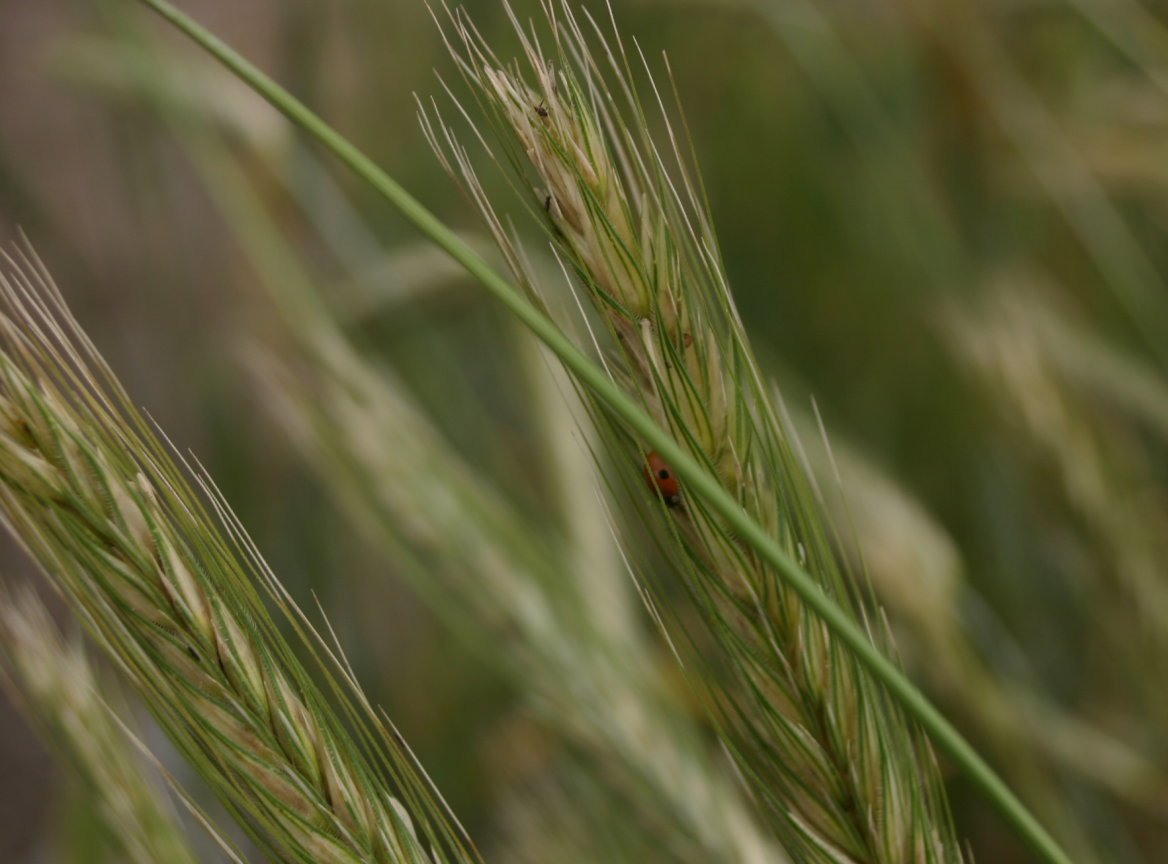
  • Hayman’s diallel analysis found mixed inheritance patterns in durum wheat traits

    Hayman’s diallel analysis found mixed inheritance patterns in durum wheat traits

    What the study found

    The study found that inheritance patterns for eight agronomic traits in durum wheat differed across F1 and F2 generations. Plant height was mainly controlled by additive gene action, while several yield-related traits showed non-additive inheritance and overdominance.

    Why the authors say this matters

    The authors conclude that these patterns support different breeding strategies for different traits. They suggest pedigree selection for additive traits in early generations and recurrent or advanced-generation selection for yield components, to improve durum wheat under semi-arid Mediterranean conditions.

    What the researchers tested

    The researchers used Hayman's diallel analysis, a breeding design for estimating how parental genes influence traits, in a 4 × 4 half-diallel mating scheme. They evaluated F1 and F2 progenies in field trials at the INRAA experimental station in Sétif, Algeria, during the 2021-2022 and 2023-2024 growing seasons.

    What worked and what didn't

    Significant genotypic variation was found across all studied traits. Plant height showed predominantly additive gene action, while spike length and number of grains per spike shifted from overdominance in F1 to partial dominance in F2, and spike weight, number of spikes per plant, and grain yield showed persistent non-additive inheritance and overdominance across generations.

    What to keep in mind

    The abstract does not describe detailed limitations. It also reports that dominance effects decreased in F2 for most traits and that allele distribution was asymmetric, but it does not provide additional caveats beyond the study's own breeding context.

    • Eight agronomic traits were analyzed in durum wheat F1 and F2 progenies.
    • Plant height was predominantly governed by additive gene action.
    • Spike length and number of grains per spike shifted from overdominance in F1 to partial dominance in F2.
    • Spike weight, number of spikes per plant, and grain yield showed persistent non-additive inheritance across generations.
    • High broad-sense heritability and variable narrow-sense heritability led the authors to recommend generation-specific breeding strategies.
  • Structure-preserving simulations show differing turbulence behavior

    What the study found

    The study found that long-time simulations of three two-dimensional magnetohydrodynamics models showed consistent behavior for the magnetic potential in reduced magnetohydrodynamics and Hazeltine’s model, while vorticity behaved differently across the models. The authors report that these simulations suggest inverse cascades of magnetic energy and mean-square magnetic potential, and that Hazeltine’s model and the Charney–Hasegawa–Mima equation show an inverse cascade of kinetic energy not present in reduced magnetohydrodynamics.

    Why the authors say this matters

    The authors say the geometric structure of these models in phase space affects their statistical long-time behavior, so preserving that structure is important for capturing qualitative features in numerical simulations. They conclude that structure-preserving discretisations are critical for this purpose.

    What the researchers tested

    The researchers studied three two-dimensional magnetohydrodynamics models: reduced magnetohydrodynamics (RMHD), Hazeltine’s model, and the Charney–Hasegawa–Mima (CHM) equation. They used the matrix hydrodynamics approach to build structure-preserving discretisations and then ran long-time simulations with randomized initial data, comparing the models.

    What worked and what didn't

    For the magnetic potential, RMHD and Hazeltine’s model both produced magnetic dipoles; in CHM, the magnetic potential was prescribed. The study says the spectral scaling diagrams empirically verified inverse cascades of magnetic energy and mean-square magnetic potential, and that Hazeltine’s model and CHM indicated an inverse cascade of kinetic energy, unlike RMHD. In contrast, RMHD formed sharp vortex filaments with rapidly growing vorticity values, while Hazeltine’s model and CHM showed only small variation in vorticity values.

    What to keep in mind

    The summary does not describe specific numerical details, error analysis, or limitations of the simulations. The abstract also notes that CHM has a prescribed magnetic potential, so its magnetic-potential behavior is not directly comparable in the same way as in RMHD and Hazeltine’s model.

    • Three two-dimensional models were studied: RMHD, Hazeltine’s model, and the CHM equation.
    • Structure-preserving discretisations were built using the matrix hydrodynamics approach.
    • RMHD and Hazeltine’s model showed consistent magnetic-potential behavior and produced magnetic dipoles.
    • The authors report inverse cascades of magnetic energy and mean-square magnetic potential.
    • Hazeltine’s model and CHM indicated an inverse cascade of kinetic energy not seen in RMHD.
    • RMHD developed sharp vortex filaments, while Hazeltine’s model and CHM showed only small vorticity variation.
  • Oscillations observed in proton capture by oxygen-20

    What the study found

    The study found that the proton-capture excitation function for oxygen-20 and hydrogen-1 shows oscillatory behavior near the barrier, with broad peaks about 50-100 keV wide. The authors interpret this as evidence for one or more low-angular-momentum quasi-bound states in fluorine-21.

    Why the authors say this matters

    The authors suggest this result helps probe the existence and character of low-angular-momentum quasi-bound states in fluorine-21. They also conclude that the oscillatory pattern may indicate that the quasi-bound state in fluorine-21 shares vibrational character with the first excited 2+ state of oxygen-20, meaning a state with angular momentum and positive parity.

    What the researchers tested

    The researchers used a (p,n) reaction and an active target detector to measure the capture excitation function for oxygen-20 plus hydrogen-1 for the first time. They compared the measurements with one-channel coupled-channel calculations, and with R-matrix coupled-channel calculations that also included the first excited 2+ state of oxygen-20.

    What worked and what didn't

    The one-channel coupled-channel calculations agreed reasonably well with the overall excitation function, but they overpredicted the cross section at the lowest measured energies and did not reproduce the observed oscillations. The R-matrix coupled-channel calculations including the first excited 2+ state did produce oscillatory behavior that roughly matched the observed oscillations in both size and position.

    What to keep in mind

    The abstract does not describe detailed limitations beyond the models' mismatch at the lowest energies and the failure of the simpler calculations to reproduce the oscillations. The findings are specific to the measured oxygen-20 plus hydrogen-1 capture excitation function and the models compared in this study.

    • The proton-capture excitation function for oxygen-20 and hydrogen-1 was measured for the first time.
    • Near the barrier, the capture cross section showed broad oscillatory peaks about 50-100 keV wide.
    • The oscillations were interpreted as evidence for low-angular-momentum quasi-bound states in fluorine-21.
    • One-channel coupled-channel calculations matched the overall trend but missed the oscillations and overpredicted the lowest-energy cross section.
    • Including the first excited 2+ state of oxygen-20 in R-matrix coupled-channel calculations produced oscillations that roughly matched the data.
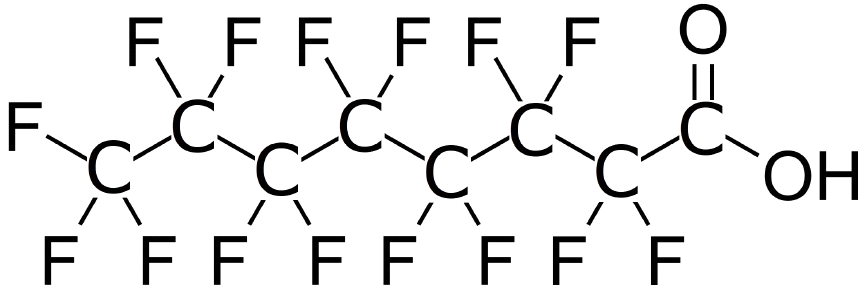
  • PFOA-linked bladder cancer genes formed a strong classifier

    PFOA-linked bladder cancer genes formed a strong classifier

    What the study found

    The study identified 69 candidate genes linked to both predicted perfluorooctanoic acid (PFOA) targets and bladder cancer biology, with many tied to cell cycle control and DNA damage-related processes. It also reported that a nine-gene classifier distinguished bladder cancer samples well across multiple cohorts.

    Why the authors say this matters

    The authors conclude that their work provides a computational bridge between environmental chemical exposure and cancer-related molecular programs. They suggest the nine-gene classifier offers a systems-level, hypothesis-generating view of transcriptional programs that overlap between predicted PFOA-associated targets and bladder cancer biology.

    What the researchers tested

    The researchers used an integrative multi-cohort computational framework. They assembled 9,591 putative molecular targets associated with PFOA from five databases, analyzed bladder cancer gene expression across five cohorts, and then applied differential expression analysis, weighted gene co-expression network analysis, functional enrichment, machine learning with SHAP interpretation, and molecular docking.

    What worked and what didn't

    The nine-gene classifier showed excellent performance in the training set, with an area under the curve (AUC) of 0.986, and it stayed strong in external cohorts with AUCs from 0.944 to 1.000. SHAP analysis identified MCM7 as the most influential feature for bladder cancer classification, and docking suggested a strong predicted interaction between PFOA and IGFBP2 with a binding energy of -13.0 kcal/mol.

    What to keep in mind

    The study was computational and based on existing databases and transcriptomic cohorts, so it does not report direct experimental testing of PFOA exposure in this abstract. Limitations are not otherwise described in the available summary.

    • The study found 69 candidate genes shared between predicted PFOA targets and bladder cancer biology.
    • Many of the candidate genes were associated with cell cycle control and DNA damage-related processes.
    • A nine-gene classifier achieved an AUC of 0.986 in training and 0.944-1.000 in external cohorts.
    • MCM7 was identified as the most influential contributor in the SHAP analysis.
    • Docking suggested a strong predicted interaction between PFOA and IGFBP2.
  • Low-carbon vehicle taxes were linked to distributional injustice

    What the study found

    The study found evidence that a differentiated tax policy for low-carbon cars was associated with distributional injustice, meaning an uneven distribution of welfare across consumers, producers, and the environment. The authors report that manufacturers increased markups on low-carbon vehicles, consumer surplus fell, and emissions declined only slightly.

    Why the authors say this matters

    The authors say these findings matter because policies meant to support a transition to a low-carbon economy may not produce a just transition when car manufacturers have market power. The study suggests that market power may have limited the policy's intended effects.

    What the researchers tested

    The researchers compared market outcomes under a differentiated vehicle tax policy with a no-policy counterfactual, meaning a scenario where the policy was absent. They examined how the policy affected consumer surplus, manufacturers' markups, affordability of low-carbon vehicles, and emissions.

    What worked and what didn't

    Under the policy, manufacturers captured substantial benefits by raising markups on low-carbon vehicles. Affordability did not improve as planned, consumer surplus declined, and emissions decreased only marginally. The authors also suggest reinstating a uniform vehicle tax alongside sales requirements for low-carbon vehicles imposed on manufacturers.

    What to keep in mind

    The summary provided does not describe detailed limitations beyond the comparison with a no-policy counterfactual. The findings are specific to the policy and market setting studied, and the abstract does not provide additional scope constraints.

    • Differentiated vehicle taxes were associated with distributional injustice.
    • Manufacturers increased markups on low-carbon vehicles.
    • Consumer surplus declined under the policy.
    • Affordability of low-carbon vehicles did not improve as planned.
    • Emissions decreased only marginally.
  • Advanced Parkinson’s patients prioritized efficacy and route of administration

    What the study found

    People with advanced Parkinson’s disease and their care partners placed the greatest importance on the route of administration, meaning how a treatment is delivered, and on hours of ON time without troublesome dyskinesia, meaning time when symptoms are controlled without unwanted movements. Nonsurgical treatments were strongly preferred, and oral pills were the most preferred option.

    Why the authors say this matters

    The authors conclude that understanding these preferences may support more informed and meaningful decision-making between healthcare providers, people with advanced Parkinson’s disease, and care partners. The study suggests that treatment choices should reflect both symptom control and how a treatment is delivered.

    What the researchers tested

    The researchers ran a discrete choice experiment, a survey method that asks people to choose between hypothetical treatment options with different features. They included 304 participants from the U.S., U.K., and Germany: 223 people with advanced Parkinson’s disease and 81 care partners. The treatments varied across seven attributes, including ON time without troublesome dyskinesia, early morning OFF time, side effect risks, route of administration, pill regimen frequency, and device maintenance.

    What worked and what didn't

    In the survey analysis, route of administration had the highest conditional relative importance score, followed by hours of ON time without troublesome dyskinesia. The other attributes were of similar importance to one another. Nonsurgical treatments were strongly preferred, with oral pills preferred most, followed by subcutaneous infusion without surgery.

    What to keep in mind

    The abstract does not describe limitations in detail. The findings come from a choice experiment using hypothetical treatments, so they reflect stated preferences within the survey design rather than actual treatment decisions.

    • 304 participants were included: 223 people with advanced Parkinson’s disease and 81 care partners.
    • Route of administration was the most important treatment attribute in the survey.
    • Hours of ON time without troublesome dyskinesia was the second most important attribute.
    • Oral pills were the most preferred treatment format.
    • Nonsurgical treatments were strongly preferred over surgical options.