Blog

  • Collaboration among bureaucrats is linked to shared experience, trust, and reciprocity

    Collaboration among bureaucrats is linked to shared experience, trust, and reciprocity

    What the study found

    The study argues that collaboration among bureaucrats is associated with networks built from common experiences such as profession, training, and related situations. It also says that trust and reciprocity help maintain collaboration once those networks exist.

    Why the authors say this matters

    The authors state that bureaucrats' collaboration matters because it can significantly contribute to achieving policy goals. The study suggests that understanding how collaboration forms and is sustained may be relevant for public service performance.

    What the researchers tested

    The article examines deductive premises about collaboration using an interview study with bureaucrats in Colombia. It tracks collaboration patterns in their daily routines.

    What worked and what didn't

    The abstract reports that collaboration appears to occur when bureaucrats have networks based on shared experiences. It also indicates that trust and reciprocity sustain those collaboration patterns.

    What to keep in mind

    The available summary does not describe detailed findings, sample size, or specific interview procedures. It also does not state any limitations beyond the study's focus on bureaucrats in Colombia.

    • The study links bureaucratic collaboration to networks formed through shared professional and training experiences.
    • Trust and reciprocity are described as sustaining collaboration after networks are formed.
    • The paper says collaboration can significantly contribute to achieving policy goals.
    • The researchers used interviews with bureaucrats in Colombia and examined daily collaboration patterns.

  • Prospective teachers’ GenAI acceptance and AI literacy vary by discipline

    What the study found

    The study found that candidate teachers’ acceptance of generative artificial intelligence (GenAI) and their artificial intelligence literacy (AIL, meaning knowledge and understanding of AI) varied across several characteristics. Some differences were linked to department, grade level, AI tool use, and self-perceived proficiency.

    Why the authors say this matters

    The authors suggest that the findings help explain what influences prospective teachers’ GenAI acceptance and AIL. They also conclude that qualitative findings clarify the quantitative results.

    What the researchers tested

    The researchers used an explanatory sequential mixed methods design. They collected quantitative data from 723 prospective teachers using an information form, a GenAI Acceptance Scale, and an AIL Scale, and qualitative data from 48 prospective teachers using interviews.

    What worked and what didn't

    GenAI acceptance did not differ significantly by gender or daily internet use. It did show differences by department, grade level, AI tools used, and self-perceived proficiency. AIL differed significantly by gender, department, tool usage, and proficiency level, and scores were higher among those trained in artificial intelligence.

    What to keep in mind

    The abstract does not describe sample limits beyond the groups studied or any other methodological limitations. It also does not provide the size or direction of every difference beyond the results summarized here.

    • GenAI acceptance and AI literacy were examined among 723 prospective teachers.
    • GenAI acceptance showed no significant differences by gender or daily internet use.
    • GenAI acceptance differed by department, grade level, AI tools used, and self-perceived proficiency.
    • AIL differed significantly by gender, department, tool usage, and proficiency level.
    • Those trained in artificial intelligence had higher AIL scores.
    • Qualitative interviews were used to clarify the quantitative findings.
  • Policy rate changes did not significantly affect bank credit in Morocco

    Policy rate changes did not significantly affect bank credit in Morocco

    What the study found

    The study found that bank credit to Morocco's non-financial private sector showed strong short-run inertia, meaning it did not respond significantly to policy-rate changes over the short term. It also found a stable long-run relationship in credit, but no significant long-run elasticities for monetary policy or credit risk variables.

    Why the authors say this matters

    The authors conclude that monetary transmission in Morocco appears to work gradually and indirectly, mainly through prudential and balance-sheet channels rather than the conventional interest-rate channel. They suggest that the effectiveness of monetary policy depends on prevailing risk conditions and how those conditions interact with prudential frameworks in bank-based emerging financial systems.

    What the researchers tested

    The researchers analyzed monthly data from 2006 to 2023 for bank credit granted to the non-financial private sector in Morocco. They used an autoregressive distributed lag and error-correction model (ARDL-ECM), which separates short-run credit movements from long-run adjustment, and they accounted for possible structural breaks.

    What worked and what didn't

    Changes in the policy rate did not have a statistically significant short-run effect on bank credit. The bounds test supported a stable long-run equilibrium relationship in credit, but the study did not identify significant long-run effects from monetary policy or credit risk variables; instead, short-run adjustment mechanisms, especially credit risk and balance-sheet allocation, appeared to drive the dynamics.

    What to keep in mind

    The summary does not provide detailed limitations beyond the study's focus on Morocco and the 2006–2023 period. The results are specific to a bank-dominated emerging economy and to the variables and model used in the analysis.

    • Monthly data from Morocco covering 2006–2023 were analyzed.
    • The policy rate was not a statistically significant short-run driver of bank credit.
    • A stable long-run equilibrium relationship in credit was supported by the bounds test.
    • No significant long-run elasticities were found for monetary policy or credit risk variables.
    • Credit dynamics appeared to be driven mainly by short-run adjustment, credit risk, and balance-sheet allocation.
  • Game-theoretic cosmology links cosmic memory to dark-sector effects

    What the study found

    The authors present a game-theoretic statistical framework for cosmology called Cosmological Teleodynamics. They describe the dark sector, cosmic acceleration, large-scale structure, and cosmic tensions as emerging from nonlocal memory and persistent organization in a self-gravitating Universe.

    Why the authors say this matters

    The study suggests this framework could offer a unified, emergent, and testable alternative to the conventional dark sector. The authors conclude it may help explain cosmic acceleration without new particles and place the Universe in a continuous form of Nash equilibrium, a game-theory concept describing mutual best responses.

    What the researchers tested

    The researchers introduced a maximum-caliber weight on cosmic histories and a bias functional intended to encode structural memory. Using this framework, they derived modified Friedmann, Boltzmann, and Poisson equations; the Friedmann equation describes cosmic expansion, the Boltzmann equation tracks particle distributions, and the Poisson equation relates matter to gravitational potential.

    What worked and what didn't

    According to the abstract, the framework can generate dark energy-like acceleration, dark matter-like clustering, and scale-dependent growth suppression. The authors also state that it can naturally help alleviate the H0 and S8 tensions, produce anisotropic velocity fields, and predict environment-dependent halo signatures that cannot arise from particle dark matter or scalar-field dark energy.

    What to keep in mind

    The available summary does not describe limitations, data used, or independent validation. The claims are presented as theoretical results from the proposed framework, so the abstract alone does not show how well the model performs against observations.

    • The paper proposes Cosmological Teleodynamics, a game-theoretic statistical framework for cosmology.
    • It treats dark-sector effects as emergent consequences of nonlocal memory and persistent organization.
    • The authors say their derived equations can produce dark energy-like acceleration and dark matter-like clustering.
    • The abstract says the framework may help alleviate the H0 and S8 tensions.
    • The authors report generalized horizon entropy and temperature, and a Law of Universal Arbitrage Equilibrium.
  • Freeze-thaw changes water, heat, and salt movement in saline farmland soils

    What the study found

    Freeze–thaw conditions changed how water, heat, and salt moved through saline farmland soil. Air temperature and snow cover were linked to vertical differences in heat and mass transfer, and the study identified different behavior in shallow and deeper soil layers.

    Why the authors say this matters

    The authors conclude that the findings provide a reference for parameterized characterization and quantitative assessment of water–salt processes in comparable saline soils. The study also suggests the mechanisms behind moisture recovery and salt redistribution can be clarified under natural freeze–thaw conditions.

    What the researchers tested

    The researchers studied a representative saline farmland in northern China using hourly in-situ monitoring together with laboratory freeze–thaw experiments. They identified key periods and quantified the spatiotemporal evolution of coupled water–heat–salt dynamics and related parameter responses.

    What worked and what didn't

    Frozen soil and snow increased shallow soil water content by 32.20% relative to early winter. Snowmelt infiltration reduced salt content by 15.44–34.02%, while permeability dropped strongly during freezing and then exceeded pre-freeze levels after thawing, which facilitated infiltration and downward salt leaching. Thermal conductivity increased by 20.76–56.78%, and volumetric heat capacity decreased by 22.30–39.41%, so cooling proceeded faster than warming.

    What to keep in mind

    The abstract does not describe specific limitations beyond the study being conducted in one representative saline farmland and in laboratory freeze–thaw experiments. The reported findings are therefore presented within the context of the site and conditions studied.

    • Freeze–thaw conditions reshaped water, heat, and salt behavior in saline farmland soil.
    • Snow cover and air temperature jointly affected vertical heat and mass transfer.
    • Shallow soil water content increased by 32.20% relative to early winter.
    • Snowmelt infiltration reduced salt content by 15.44–34.02%.
    • Permeability fell sharply during freezing and rose above pre-freeze levels after thawing.
    • Soil temperature gradient and matrix potential gradient were identified as the main drivers of water–salt migration.
  • Epicormic foliage chemistry varied after fire

    Epicormic foliage chemistry varied after fire

    What the study found

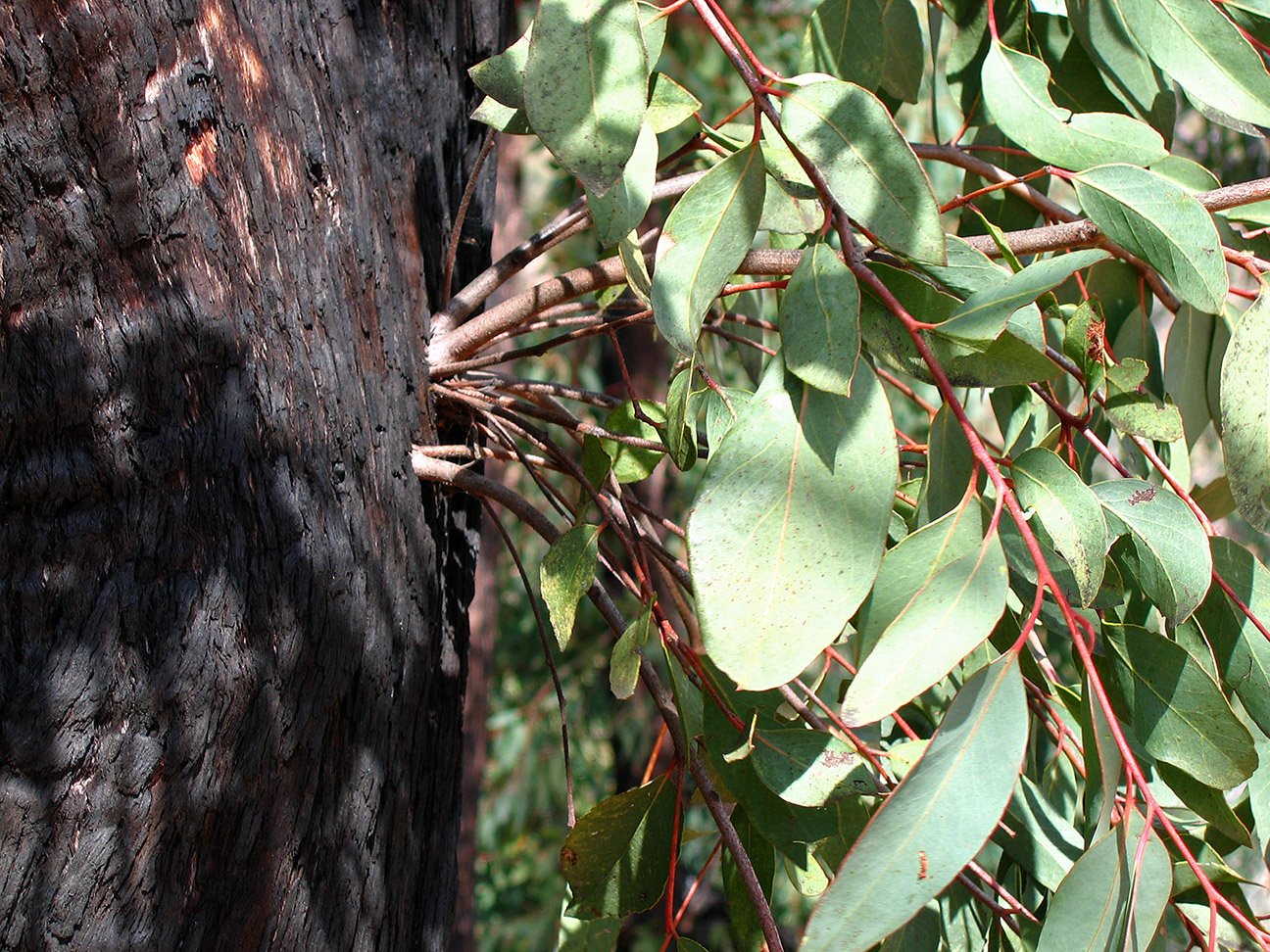
    Epicormic regrowth, the new shoots that sprout from living tree tissue after fire, differed chemically from mature foliage. The pattern depended on species and subgenus, and the suitability of this regrowth for leaf-eating animals was highly context-dependent.

    Why the authors say this matters

    The authors suggest that post-fire food availability for arboreal folivores, such as koalas and southern greater gliders, depends not just on whether foliage returns quickly, but on its chemistry. They conclude that forests with a mix of resprouting eucalypt species may provide enough nutrition to support these animals during recovery.

    What the researchers tested

    The researchers sampled Eucalyptus foliage in mixed-species eucalypt forests dominated by monocalypt and symphyomyrtle subgenera in southeastern Australia. They compared leaves collected a year before and after the 2019/20 Black Summer bushfires to see how epicormic leaf chemistry differed from mature leaves and whether the regrowth seemed nutritionally suitable for arboreal folivores.

    What worked and what didn't

    Epicormic leaves generally had higher nitrogen concentrations than mature leaves, but not necessarily higher available nitrogen. Subgenus-specific plant secondary metabolite (PSM, herbivore-deterring chemical) concentrations were higher in epicormic foliage of symphyomyrtle species, while monocalypt species showed lower PSMs after fire.

    What to keep in mind

    The abstract does not report detailed limitations or uncertainty measures. The findings are based on the sampled forests and species mix in southeastern Australia, so the results are described as context-dependent rather than universal.

    • Epicormic regrowth differed chemically from mature eucalypt foliage.
    • Differences in epicormic leaf chemistry were driven by species and subgenus.
    • Epicormic leaves generally had higher nitrogen, but not always higher available nitrogen.
    • Symphyomyrtle species had higher PSM concentrations in epicormic foliage after fire.
    • Monocalypt species showed lower PSMs in post-fire epicormic foliage.
    • The authors suggest mixed-species forests may better support arboreal folivores during recovery.
  • Logic’s neutrality is framed as theory closure

    What the study found

    The authors conclude that logic’s neutrality can be understood in terms of theory closure, if the idea is interpreted correctly. They present this as a way to make sense of the view that logic imposes no significant constraints on the world.

    Why the authors say this matters

    The study suggests that viewing logic as a tool for theory building helps explain what logic’s neutrality means. The authors also connect this account to the distinction between validity and truth, and to broader issues in the philosophy of logic.

    What the researchers tested

    The paper examines a proposal originally sketched by Jc Beall and develops it for the question of logic’s neutrality. The authors use a metalinguistic framework and discuss the deduction theorem and the relationship between entailment and implication.

    What worked and what didn't

    The authors argue that mere theory closure can serve as a hallmark of logic’s neutrality. They also discuss complications and possible objections, but the abstract does not specify which objections were decisive or which parts of the account failed.

    What to keep in mind

    The abstract provides a conceptual argument rather than empirical evidence. It does not give detailed limitations, and the precise force of the proposal depends, as the authors note, on correct interpretation.

    • The authors conclude that logic’s neutrality can be understood through theory closure.
    • The paper treats logic as a tool for theory building.
    • The account is linked to a distinction between validity and truth.
    • A metalinguistic framework is used to develop the proposal.
    • The authors discuss the deduction theorem and the relation between entailment and implication.
  • Wind shear amplifies soil moisture effects on thunderstorm growth

    Wind shear amplifies soil moisture effects on thunderstorm growth

    What the study found

    The study found that wind shear, the change in wind speed or direction with height, strengthens the influence of soil moisture contrasts on thunderstorm development. The most extreme storm initiations were especially likely over favorable soil moisture conditions, and the greatest vertical storm growth occurred where soil-moisture-driven circulations opposed shear-induced cloud movement.

    Why the authors say this matters

    The authors conclude that the combination of soil moisture heterogeneity and wind shear may provide a potentially important source of predictability for where deep convection develops, especially for rapidly developing thunderstorms. They also say the effect favors negative soil moisture–precipitation feedbacks globally.

    What the researchers tested

    The researchers analyzed 2.2 million afternoon events across sub-Saharan Africa. They examined how soil moisture patterns and wind shear were related to convective initiation and storm growth.

    What worked and what didn't

    They found 68% more initiations classed as extreme under favorable soil conditions than under unfavorable ones. Developing clouds followed the mid-level wind direction, and when that direction opposed the low-level flow, rainfall was strongly correlated with locally drier soils; the shear conditions were particularly common over tropical north Africa.

    What to keep in mind

    The abstract does not describe detailed study limitations beyond the regional analysis and afternoon-event focus. The findings are based on observed relationships reported in the abstract, so the summary here is limited to those stated results.

    • Wind shear amplified the influence of soil moisture contrasts on thunderstorm growth.
    • The study reported 68% more extreme initiations under favorable soil conditions than under unfavorable ones.
    • Greatest vertical storm growth occurred where soil-moisture-driven circulations opposed shear-induced cloud displacement.
    • Rainfall was strongly correlated with locally drier soils when mid-level wind opposed low-level flow.
    • The authors say the pattern may be a potentially important source of predictability for deep convection.
  • Ancient DNA shows widespread directional selection in West Eurasia

    What the study found

    The study found that many hundreds of alleles were affected by strong directional selection in West Eurasia over the past ten millennia. It also found changes in combinations of alleles that today predict complex traits, including lower predicted body fat and schizophrenia and higher predicted cognitive performance.

    Why the authors say this matters

    The authors conclude that ancient DNA can reveal more about human evolutionary biology than previously realized. They also suggest that the findings show sustained changes in allele frequency were widespread in this period, rather than rare as previously assumed.

    What the researchers tested

    The researchers presented a method for detecting directional selection in ancient DNA time-series data, meaning data collected across time to track changes in genetic variants. They tested for consistent trends in allele frequency change over time and applied the method to 15,836 West Eurasians, including 10,016 newly generated samples.

    What worked and what didn't

    The method identified many hundreds of alleles as having experienced strong directional selection in the last 10,000 years. The study also estimated selection coefficients at 9.7 million variants, and reported one-standard-deviation changes on the scale of modern variation in allele combinations linked to complex traits.

    The abstract states that classic hard sweeps, where a strongly advantageous mutation rises to fixation, have been rare over the broad span of human evolution. It also notes that the trait effects were measured in industrialized societies, and it remains unclear how they relate to phenotypes that were adaptive in the past.

    What to keep in mind

    The abstract says the trait associations were measured in industrialized societies, so their relevance to past environments is unclear. It also notes the difficulty of distinguishing directional selection from changes due to migrations, population structure, or non-adaptive purifying or stabilizing selection.

    • The study analyzed 15,836 ancient West Eurasian genomes, including 10,016 new samples.
    • Many hundreds of alleles were found to have undergone strong directional selection in the past 10,000 years.
    • The authors estimated selection coefficients at 9.7 million variants.
    • Allele combinations linked to complex traits showed changes that included lower predicted body fat and schizophrenia and higher predicted cognitive performance.
    • The abstract says trait effects were measured in industrialized societies, and their past adaptive meaning is unclear.
  • FinTech and board traits are linked to higher cash holdings in Jordanian banks

    What the study found

    The study found a significant positive association between FinTech and board characteristics and banks’ cash holdings in Jordanian banks. In the abstract, the authors also say these findings support consumer theory and agency theory.

    Why the authors say this matters

    The authors conclude that the findings may help stakeholders, executives, bankers, customers, and policymakers understand the relationship between FinTech, board characteristics, and banks’ cash holdings in Jordan. They also suggest that banks in emerging economies should offer green loans for sustainability projects by leveraging FinTech adoption and board directors’ expertise to reallocate excess cash holdings.

    What the researchers tested

    The researchers examined the association between FinTech, board characteristics, and banks’ cash holdings using data from 14 banks listed on the Amman Stock Exchange from 2009 to 2024. They used panel data econometric analysis with ordinary least squares (OLS) as the main approach, and also applied two-stage least squares (2SLS), generalized method of moments (GMM), a dynamic model, and fixed effects regression to address causality and endogeneity issues.

    What worked and what didn't

    The analyses indicated that FinTech and board characteristics were significantly and positively connected with banks’ cash holdings. The abstract does not report any null or negative findings.

    What to keep in mind

    The study is based on 14 Jordanian banks, so its scope is limited to that setting and time period. The abstract does not describe specific limitations beyond noting the need for future work in other Middle Eastern countries.

    • FinTech and board characteristics were positively associated with banks’ cash holdings.
    • The study used panel data from 14 banks listed on the Amman Stock Exchange from 2009 to 2024.
    • OLS was the main analysis, with 2SLS, GMM, a dynamic model, and fixed effects regression used as additional checks.
    • The authors say the findings support consumer theory and agency theory.
    • The abstract suggests future research in other Middle Eastern countries, especially Jordan-focused work.