What the study found
The study found that very long baseline interferometry (VLBI) and Gaia Data Release 3 (DR3) give broadly consistent parallax measurements for about half of the 43 Galactic long period variable stars examined. The authors also report that Gaia DR3 parallaxes tend to be slightly smaller than VLBI values.
Why the authors say this matters
The authors conclude that the results show VLBI and Gaia astrometry are complementary for long period variable stars. They also note that this is relevant because accurate parallaxes are essential for determining distances and intrinsic properties, and because VLBI appears more effective for stars with parallaxes smaller than about 2 milliarcseconds, corresponding to distances beyond 500 parsecs.
What the researchers tested
The researchers compared astrometric measurements from VLBI and Gaia DR3 for 43 Galactic long period variable stars. They examined parallaxes and proper motions, and they also looked at how parallax uncertainties and residuals behaved across the sample.
What worked and what didn't
Parallaxes from the two methods were generally consistent within uncertainties for about half of the sample, but Gaia DR3 values were slightly smaller on average. VLBI parallax errors increased with increasing parallax, while Gaia DR3 errors stayed nearly constant; proper motions showed general agreement with a 2-sigma dispersion of about 13 km s−1, and the dispersion of parallax residuals was slightly larger for stars with pulsation periods around one year.
What to keep in mind
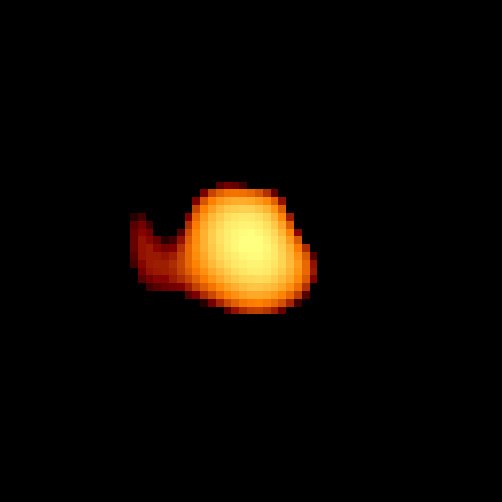
The study is limited to 43 Galactic long period variable stars. The abstract also notes that long period variables are difficult to measure because of their large stellar sizes, circumstellar matter, and time-variable surface brightness asymmetry.
Key points
- The study compared VLBI and Gaia DR3 astrometry for 43 Galactic long period variable stars.
- Parallaxes from the two methods were generally consistent within uncertainties for about half the sample.
- Gaia DR3 parallaxes tended to be slightly smaller than VLBI parallaxes.
- VLBI errors increased with parallax, while Gaia DR3 errors remained nearly constant.
- VLBI was described as more effective for parallaxes below about 2 milliarcseconds, or distances beyond 500 parsecs.
- Proper motions generally agreed, with a 2-sigma dispersion of about 13 km s−1.
Disclosure
- Research title:
- VLBI and Gaia DR3 give broadly similar LPV astrometry
- Authors:
- Akiharu Nakagawa, Tomoharu Kurayama, Hiroshi Sudou, Gábor Orosz
- Institutions:
- Joint Institute for VLBI ERIC, Kagoshima University, Sendai National College of Technology, Teikyo University, Teikyo University of Science
- Publication date:
- 2026-03-30
- OpenAlex record:
- View
- Image credit:
- Margarita Karovska (Harvard-Smithsonian Center for Astrophysics), and NASA/ESA, Wikimedia Commons, Public domain
Get the weekly research newsletter
Stay current with scholarly research without reading academic papers — one filtered digest, every Friday.