Blog

  • IL1R2 tracks vascular endothelial changes in Kawasaki disease

    What the study found

    The study found that IL1R2, a gene involved in immune signaling, was downregulated in acute Kawasaki disease and elevated in convalescence. It also found that Kawasaki disease peripheral blood mononuclear cells were associated with impaired human umbilical vein endothelial cell viability and migration.

    Why the authors say this matters

    The authors conclude that these findings may improve understanding of peripheral blood mononuclear cells and peripheral blood mononuclear cell–endothelial cell co-cultures in Kawasaki disease. They present IL1R2 as a key hub gene related to vascular endothelial function in this condition.

    What the researchers tested

    The researchers analyzed RNA sequencing data from peripheral blood mononuclear cells in 12 acute Kawasaki disease patients and 12 healthy controls to identify differentially expressed mRNAs and hub genes. They then validated selected genes in 20 Kawasaki disease patients with coronary artery lesions, 20 without coronary artery lesions, and 40 healthy controls, and used co-cultures of peripheral blood mononuclear cells with human umbilical vein endothelial cells followed by real-time PCR, ELISA, and functional assays.

    What worked and what didn't

    The RNA sequencing analysis identified 6,039 differentially expressed mRNAs, including 2,267 upregulated and 3,772 downregulated. Thirty hub genes were selected, and IL1R2, FCGR1A, and CD177 showed the reported expression changes across acute Kawasaki disease, Kawasaki disease with coronary artery lesions, and convalescence. The study also reported that Kawasaki disease peripheral blood mononuclear cells significantly impaired endothelial cell viability and migration.

    What to keep in mind

    The abstract does not describe long-term follow-up or clinical outcomes beyond the groups tested. It also does not provide detailed limitations of the study in the available summary.

    • IL1R2 was downregulated in acute Kawasaki disease and elevated in convalescence.
    • FCGR1A and CD177 showed opposite expression patterns across disease stages and coronary artery lesion status.
    • Peripheral blood mononuclear cells from Kawasaki disease were linked to reduced endothelial cell viability and migration.
    • The RNA sequencing screen found 6,039 differentially expressed mRNAs.
    • Thirty hub genes were selected from the sequencing analysis.
  • Review outlines diagnosis and management of non-nutritional rickets

    What the study found

    The review found that non-nutritional rickets is a mixed group of inherited and acquired disorders that cause defective bone mineralization not explained by vitamin D or calcium deficiency. It summarizes the main subtypes, including several forms of hypophosphatemic rickets, tumor-induced osteomalacia, vitamin D-dependent rickets types 1 and 2, and hypophosphatasia.

    Why the authors say this matters

    The authors conclude that a diagnostic algorithm and comparison tables may help clinicians identify these disorders more quickly and choose individualized treatment. The study suggests this could improve long-term musculoskeletal and quality-of-life outcomes in affected children.

    What the researchers tested

    This was a narrative review that synthesized current evidence on the pathophysiology, clinical presentation, biochemical and radiological diagnosis, and management of major non-nutritional rickets subtypes. The review also highlighted burosumab, an anti-fibroblast growth factor 23 monoclonal antibody, and asfotase alfa, an enzyme replacement therapy, along with emerging molecular therapies.

    What worked and what didn't

    The review reports the transformative role of burosumab and asfotase alfa in management. It also notes that diagnostic algorithms and comprehensive comparison tables are provided to support timely identification and individualized treatment.

    What to keep in mind

    This abstract describes a narrative review, so it does not provide new patient-level trial results. It does not state specific limitations beyond the scope of the reviewed disorders and the materials included in the summary.

    • Non-nutritional rickets is described as a heterogeneous group of inherited and acquired disorders.
    • The review covers several subtypes, including hypophosphatemic rickets, tumor-induced osteomalacia, vitamin D-dependent rickets, and hypophosphatasia.
    • Burosumab and asfotase alfa are highlighted as important therapies.
    • Diagnostic algorithms and comparison tables are provided to help clinicians.
    • The authors say timely identification and individualized treatment may improve long-term outcomes in children.
  • CORE improves link prediction with compact graph augmentations

    What the study found

    The study reports that CORE, short for COmplete and REduce, is a new data augmentation method for link prediction in graph representation learning. The authors say it learns compact and predictive graph augmentations by recovering missing edges while removing noisy or spurious information.

    Why the authors say this matters

    The authors say this matters because link prediction models can be weakened by noise in graphs and by incomplete graph data. The study suggests CORE may improve robustness and performance for link prediction.

    What the researchers tested

    The researchers proposed CORE using the Information Bottleneck principle, which is a framework for keeping only the most useful information while discarding unnecessary detail. They evaluated the method on multiple benchmark datasets for link prediction.

    What worked and what didn't

    The abstract says extensive experiments showed CORE was applicable and superior to state-of-the-art methods on multiple benchmark datasets. It also states that CORE aims to recover missing edges and remove noise, but the abstract does not provide detailed numerical results or describe specific cases where it did not work.

    What to keep in mind

    The available summary does not give the experimental setup details, dataset names, or performance numbers. It also does not describe specific limitations beyond noting that graphs can contain noisy, spurious, and incomplete information.

    • CORE is a data augmentation method for link prediction in graph representation learning.
    • The method is designed to recover missing edges and remove noisy or spurious graph information.
    • The authors base CORE on the Information Bottleneck principle.
    • The abstract says experiments on multiple benchmark datasets showed CORE outperformed state-of-the-art methods.
    • The abstract does not report detailed results, dataset names, or specific limitations.
  • Pheochromocytoma removal improved severe young-onset cardiomyopathy

    What the study found

    The study reports that a teenager with pheochromocytoma, a rare adrenal tumor that releases excess catecholamines, improved after the tumor was removed. His left ventricular function rose over time, and he was symptom-free one year later.

    Why the authors say this matters

    The authors conclude that pheochromocytoma-related heart failure needs personalized care and a multidisciplinary approach. They say this is important for achieving both surgical success and longer-term recovery.

    What the researchers tested

    This was a case report of a 16-year-old boy who presented with abdominal pain, palpitations, breathlessness, dilated cardiomyopathy, and severe heart failure. He underwent abdominal CT imaging, additional testing that identified an adrenal pheochromocytoma, careful medication adjustment, and open adrenalectomy with intensive postoperative care.

    What worked and what didn't

    Before surgery, the patient required careful balancing of alpha-blockers, inotropes, and fluid management to support the heart and reduce risk. After successful open adrenalectomy, his left ventricular function gradually improved, with ejection fraction reported to rise from 10% to 40% by one year, and his catecholamine levels returned to normal.

    What to keep in mind

    This is a single case, so the findings describe one patient's course rather than a broader group. The abstract does not provide comparative data, and it does not describe limitations beyond the rarity and seriousness of the condition.

    • A 16-year-old boy had severe heart failure linked to an adrenal pheochromocytoma.
    • The tumor was found during pre-operative abdominal CT workup.
    • He was treated with coordinated care from endocrinology, cardiology, anesthesiology, and surgery teams.
    • After open adrenalectomy, his heart function gradually improved.
    • One year later, he was symptom-free, with ejection fraction improving from 10% to 40%.
  • PFOS disrupts cholinergic neuron survival through oxidative and signaling changes

    What the study found

    PFOS exposure was linked to basal forebrain cholinergic neuron damage in a cell model. The study found that oxidative stress, prostaglandin E2 signaling, and nerve growth factor signaling were all disrupted, and that some of these effects were only partly reduced by triiodothyronine (T3).

    Why the authors say this matters

    The authors conclude that these findings give mechanistic insight into how PFOS may contribute to basal forebrain cholinergic neuron degeneration and related cognitive decline. The study also suggests potential therapeutic strategies to counter these effects.

    What the researchers tested

    The researchers used the SN56 cholinergic cell line, which is derived from the basal forebrain. They exposed the cells to PFOS at concentrations from 0.1 to 40 μM, using both a single 1-day treatment and repeated 14-day treatment, and tested PFOS alongside T3, recombinant nerve growth factor (NGF), MF-63, and N-acetylcysteine.

    What worked and what didn't

    PFOS exposure increased reactive oxygen species and was associated with reduced NRF2 pathway activity, indicating oxidative stress. It also disrupted prostaglandin E2 signaling and the NGF/TrkA/P75NTR neurotrophic pathways, which ultimately led to cell death in the cholinergic cells.

    The abstract says these neurotoxic effects were partially mitigated by T3 treatment, among other mechanisms. It does not specify in the abstract which interventions were effective for each pathway beyond this partial protection.

    What to keep in mind

    The study was done in a cell line, so the abstract does not describe direct testing in animals or people. The available summary also does not provide detailed limitations beyond the scope of the model and treatments used.

    • PFOS exposure was associated with cell death in basal forebrain cholinergic neurons.
    • The study reported oxidative stress, with increased reactive oxygen species and reduced NRF2 pathway activity.
    • PFOS also disrupted prostaglandin E2 signaling and NGF/TrkA/P75NTR signaling.
    • Triiodothyronine (T3) partially reduced the neurotoxic effects.
    • The experiments used the SN56 basal forebrain cholinergic cell line and both single and repeated PFOS treatments.
  • Negative evaluative nouns far outnumber positive ones in movie dialogue

    What the study found

    The study found a strong imbalance between negative and positive evaluative nouns in English movie dialogue, with far more negative forms than positive ones. It also found that several suffixes, including -y/-ie, -ling, -er, and -o, were productive in forming these nouns.

    Why the authors say this matters

    The authors conclude that evaluative nouns are recurrent elements in cinematic dialogue and contribute to character construction and interactional dynamics. They also say the study adds to research on evaluative morphology and discourse analysis by combining lexicographic and corpus-based approaches, and may inform film studies, translation, and applied linguistics.

    What the researchers tested

    The researchers examined evaluative nouns in English movie dialogue. They selected 176 lexemes with explicit evaluative marking from authoritative dictionaries and analyzed them in The Movie Corpus using a frequency threshold of at least 10 occurrences, combining lexicographic analysis with corpus-based methods.

    What worked and what didn't

    The analysis identified 84 negative evaluative nouns and 8 positive ones, showing a strong quantitative asymmetry. Morphologically, evaluative meanings were mainly realized through suffixation, and the suffixes -y/-ie, -ling, -er, and -o showed high productivity; these suffixes could express either negative or positive meaning depending on context.

    What to keep in mind

    The abstract does not describe limitations in detail. The study focused on English movie dialogue and on evaluative nouns with explicit evaluative marking, so its scope is limited to that dataset and selection criteria.

    • The study found far more negative evaluative nouns than positive ones in English movie dialogue.
    • 84 negative evaluative nouns were identified, compared with 8 positive ones.
    • Suffixation was the main way evaluative meanings were formed.
    • The suffixes -y/-ie, -ling, -er, and -o were highly productive in the dataset.
    • These suffixes could carry either negative or positive meaning depending on context.
  • Bed topography strongly affects Thwaites Glacier mass loss

    What the study found

    The study found that the shape of the bed beneath Thwaites Glacier has a first-order control on accumulated mass loss. It also found that final sea-level rise does not simply increase with finer bed resolution.

    Why the authors say this matters

    The authors conclude that continued high-resolution mapping of bed topography is important. The findings indicate that current projections may underestimate uncertainty linked to unresolved bed features.

    What the researchers tested

    The researchers used a coupled model of subglacial hydrology, meaning the movement of water beneath the glacier, and ice dynamics, meaning glacier motion and change. They ran projections of Thwaites Glacier evolution from several different bed topographies.

    What worked and what didn't

    Different bed topographies produced different amounts of accumulated mass loss, showing a strong effect of the underlying bed. Coupling subglacial hydrology and ice dynamics resulted in faster mass loss. However, final sea-level rise did not scale with bed resolution.

    What to keep in mind

    The abstract does not describe specific numerical values, confidence ranges, or detailed limitations beyond the issue of unresolved bed features. The study focuses on Thwaites Glacier in West Antarctica, so its findings are specific to that setting and model setup.

    • Bed topography had a first-order control on accumulated mass loss.
    • Final sea-level rise did not scale with bed resolution.
    • Coupling subglacial hydrology with ice dynamics led to faster mass loss.
    • The authors say current projections may underestimate uncertainty from unresolved bed features.
    • The study used several different bed topographies in a coupled glacier model.
  • Machine learning system automates Excel chart generation

    What the study found

    The study presents a pipeline that turns raw Excel spreadsheets into dynamic, publication-quality graphs using machine learning (ML) and an interactive dashboard. It reports that the system improves the speed and accuracy of choosing graph types and layouts compared with manual selection.

    Why the authors say this matters

    The authors suggest the approach matters because it can make data visualization more efficient and support exportable, publication-ready graphics. The study also indicates that automated labeling, anomaly highlighting, and dashboard-based exploration may improve the visualization workflow.

    What the researchers tested

    The researchers describe a complete pipeline including dataset ingestion, automatic schema detection, feature engineering, ML-based chart recommendation and parameterization, graph rendering, and an interactive web dashboard for exploration and export. They validated it on three real-world Excel datasets: finance, sensor time-series, and survey responses.

    What worked and what didn't

    The paper reports quantitative and qualitative improvements in time-to-visualization and user satisfaction. It also says the system provided automated labeling, anomaly highlighting, and exportable vector graphics; no specific failures are described in the abstract.

    What to keep in mind

    The available summary does not provide detailed performance values, comparison settings, or limitations. The results are described for three Excel datasets, so the scope in the abstract is limited to those examples.

    • The paper describes a pipeline for converting Excel spreadsheets into dynamic graphs using ML.
    • It reports faster and more accurate graph-type and layout selection than manual choice.
    • The system includes automated labeling, anomaly highlighting, and exportable vector graphics.
    • Validation was performed on finance, sensor time-series, and survey response datasets.
    • The abstract reports improvements in time-to-visualization and user satisfaction.
  • Average Nikolskii factors are constant or logarithmic for random trigonometric polynomials

    What the study found

    The study found exact orders for the average Nikolskii factor of random trigonometric polynomials. For 1 ≤ p < q < ∞, the average factor is constant, while for 1 ≤ p < q = ∞, it grows like the square root of log n.

    Why the authors say this matters

    The authors compare their averages with worst-case bounds and show that the typical behavior is much smaller than the worst-case behavior. The study suggests this gives a sharper picture of how these polynomials behave on average.

    What the researchers tested

    The researchers studied the Nikolskii factor N_{p,q}(T_a), defined as the ratio of the q-norm to the p-norm of a trigonometric polynomial. They considered random trigonometric polynomials with independent Gaussian coefficients and also gave a generalization to random multivariate trigonometric polynomials.

    What worked and what didn't

    For 1 ≤ p < q < ∞, the average Nikolskii factor was of order n^0, meaning it stayed constant. For 1 ≤ p < q = ∞, it was of order (ln n)^{1/2}. The worst-case bounds mentioned in the abstract were larger: n^{1/p-1/q} for finite q and n^{1/p} for q = ∞.

    What to keep in mind

    The abstract does not describe limitations, data sources, or proof details. The results are stated for random trigonometric polynomials with independent N(0, σ^2) coefficients, and the multivariate extension is only mentioned briefly in the abstract.

    • Average Nikolskii factors were determined exactly for random trigonometric polynomials.
    • For finite q, the average factor is constant rather than growing with n.
    • For q = infinity, the average factor grows like the square root of log n.
    • The average behavior is smaller than the worst-case bounds stated in the abstract.
    • The paper also extends the result to random multivariate trigonometric polynomials.
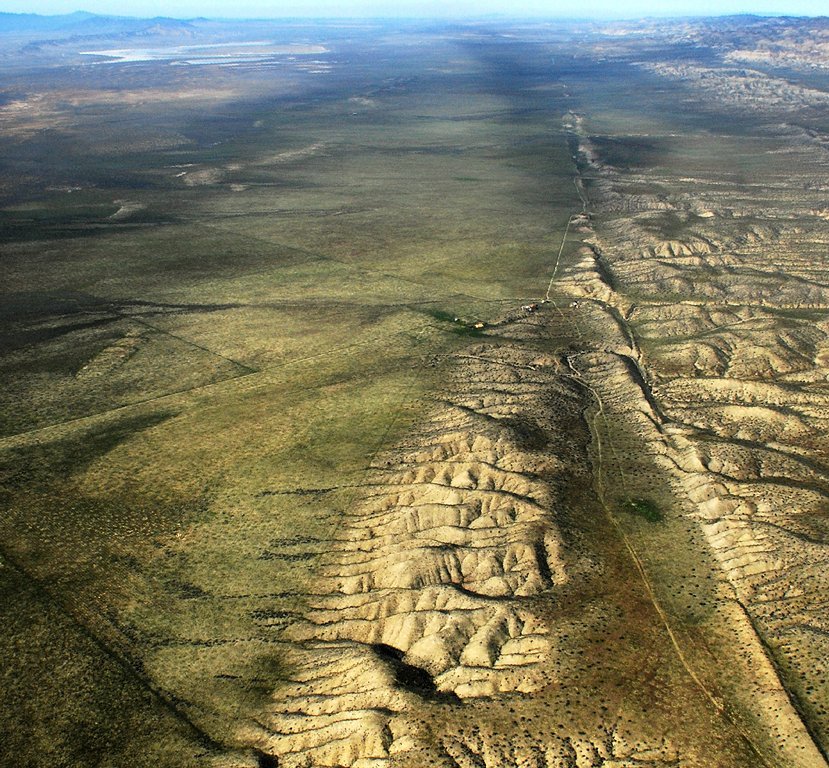
  • Near-field stopping phases mark abrupt arrest in large strike-slip earthquakes

    Near-field stopping phases mark abrupt arrest in large strike-slip earthquakes

    What the study found

    The study found that near-field ground-motion stopping phases can show when rupture propagation in large strike-slip earthquakes ends abruptly. A transient overshoot in fault-parallel ground-surface displacement was identified as a robust sign of this abrupt stop.

    Why the authors say this matters

    The authors conclude that these observations help explain where and when earthquake rupture stops, which they note is important because earthquake magnitude is controlled by rupture arrest. They also suggest the findings indicate large strike-slip earthquakes may rupture in segments, with abrupt stops and restarts at internal fault-segment boundaries.

    What the researchers tested

    The researchers analyzed near-field seismic records from 12 global large strike-slip earthquakes. They also used dynamic rupture simulations to examine how shallow low-wavespeed rocks affect near-field ground motions and surface displacement overshoot.

    What worked and what didn't

    The analysis found that displacement overshoot was a consistent diagnostic signature of abrupt rupture termination in the events studied. The simulations showed that low-wavespeed rocks at shallow depth strongly amplify near-field ground motions and increase the overshoot recorded at the surface. The stopping phases were observed at near-fault locations far from mapped rupture termini, which the authors interpret as evidence of segmented rupture behavior.

    What to keep in mind

    The abstract does not describe limitations in detail beyond the scope of the 12 events studied and the simulations used. The interpretation about segmented rupture is based on the observed stopping phases and the authors' analysis.

    • Near-field stopping phases were observed in 12 global large strike-slip earthquakes.
    • A transient overshoot in fault-parallel ground-surface displacement was identified as a diagnostic sign of abrupt rupture arrest.
    • Dynamic simulations showed that shallow low-wavespeed rocks amplify near-field ground motions and displacement overshoot.
    • Stopping phases appeared at near-fault locations far from mapped rupture termini.
    • The authors suggest large strike-slip earthquakes may rupture in segments, with stops and restarts at internal boundaries.