Blog

  • Multimodal dataset improves land cover and crop mapping benchmarks

    What the study found

    The study introduces FLAIR-HUB, a large-scale multimodal land cover dataset with 20 cm annotations covering 2528 km² of France. The authors report that using nearly all available modalities gave the best land cover performance, and that multimodal fusion and fine-grained classification are complex.

    Why the authors say this matters

    The authors conclude that FLAIR-HUB provides a valuable foundation for supervised, self-supervised, and transfer learning in Earth Observation research. They also say the dataset and benchmarks can support progress in land cover and crop mapping.

    What the researchers tested

    The researchers built a benchmark using six aligned data sources: aerial imagery, Sentinel-2 optical multi-spectral time series, Sentinel-1 synthetic aperture radar (SAR) time series, high-resolution SPOT satellite images, topographic data, and historical aerial images. They evaluated multimodal fusion and deep learning models, including convolutional neural networks and transformers, and also explored multi-task learning.

    What worked and what didn't

    The best land cover result reported was 78.2% accuracy and 65.8% mean Intersection over Union, achieved using nearly all modalities. The abstract says the benchmarks underscore the complexity of multimodal fusion and fine-grained classification, but it does not provide detailed per-model comparisons in the summary.

    What to keep in mind

    The available summary does not describe detailed limitations beyond noting the complexity of multimodal fusion and fine-grained classification. It also does not give full results for every tested model, task, or modality combination.

    • FLAIR-HUB is a large-scale multimodal land cover dataset covering 2528 km² of France.
    • The dataset includes six aligned modalities, from aerial imagery to satellite time series and historical aerial images.
    • Annotations are very high resolution, at 20 cm, supporting fine-grained land cover description.
    • The best land cover performance reported was 78.2% accuracy and 65.8% mean Intersection over Union.
    • The strongest result used nearly all modalities rather than a single source.
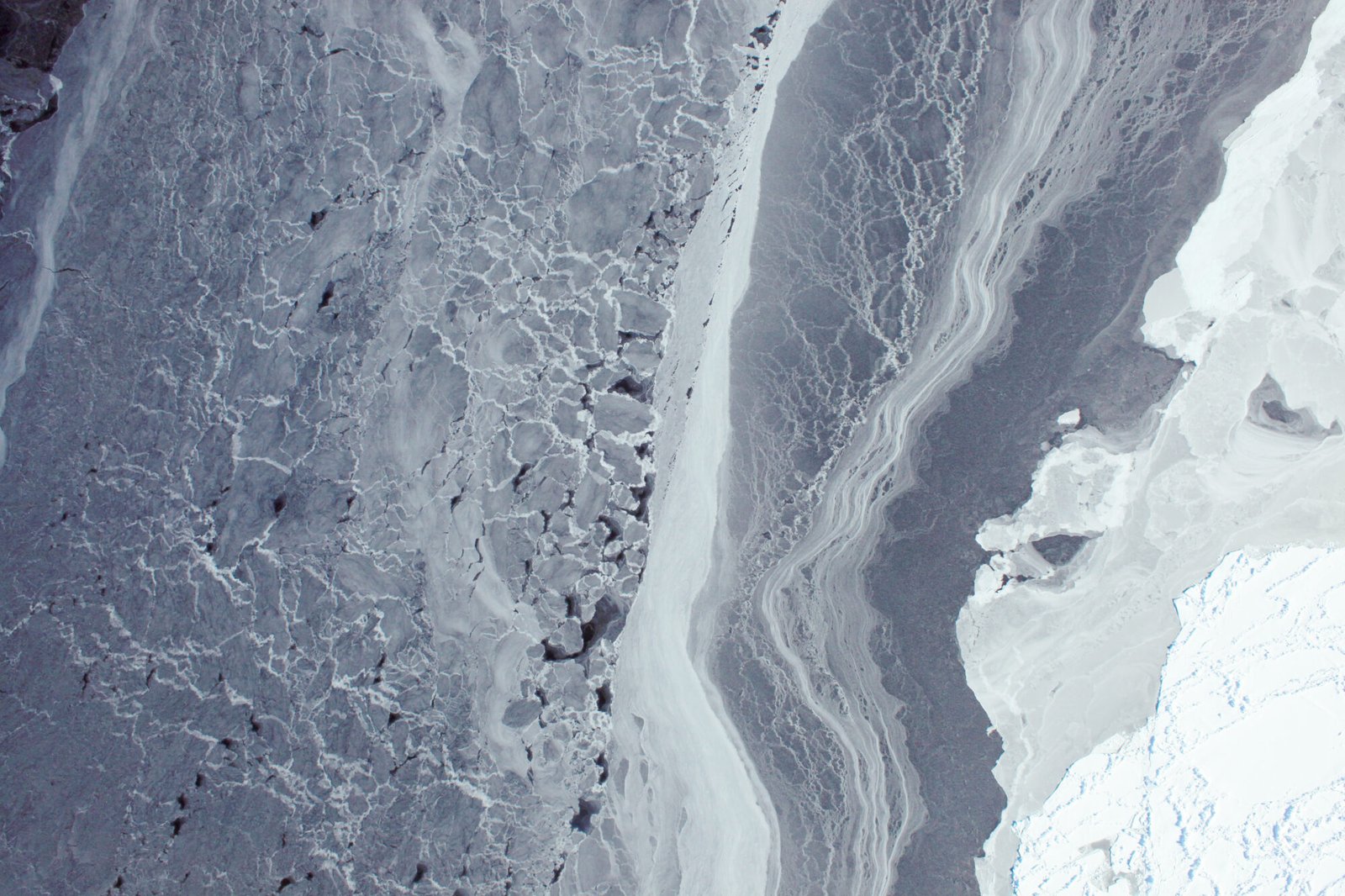
  • Article discusses automation challenges in future Antarctic Bedmaps

    Article discusses automation challenges in future Antarctic Bedmaps

    What the study found

    The article says that automating future Antarctic Bedmaps, which are gridded maps of ice thickness, surface and bed topography, is possible in principle but faces several technical challenges. It highlights problems such as survey disagreements, large data gaps, changing ice thickness, and interpolation methods that do not work equally well in all landscapes.

    Why the authors say this matters

    The author says these Bedmaps are fundamental to improving predictions of Antarctica's future, and that the ice-sheet modelling community needs new datasets quickly. The article suggests that reducing errors and speeding up dataset production would help meet that need.

    What the researchers tested

    The article examines the challenges involved in generating new Bedmaps from expanding airborne survey datasets. It considers not only ice thickness, surface and bed mapping, but also related components such as the coastline, grounding line, rock outcrops, ice shelves, and bathymetry, which is the mapping of the seafloor.

    What worked and what didn't

    The article says that interpolation, a method for estimating values between measured points, can work well in some cases but not others. It also reports that merging mapped ice sheets, shelves, grounded bed, and seafloor can introduce spurious cliffs and bumps in the grounding zone, and that these errors often require careful checking, correction, or local bespoke approaches.

    What to keep in mind

    This is a perspective article highlighting challenges rather than reporting a single new dataset or experiment. The abstract does not describe a specific automated solution, quantitative test, or formal comparison of methods.

    • Future Antarctic Bedmaps face challenges from survey disagreement and large data gaps.
    • Interpolation can work for one landscape but not another.
    • Merging ice-sheet and seafloor grids can create spurious cliffs and bumps in the grounding zone.
    • The article says Bedmaps need to be produced more quickly for the ice-sheet modelling community.
    • No specific automated method or quantitative result is described in the abstract.
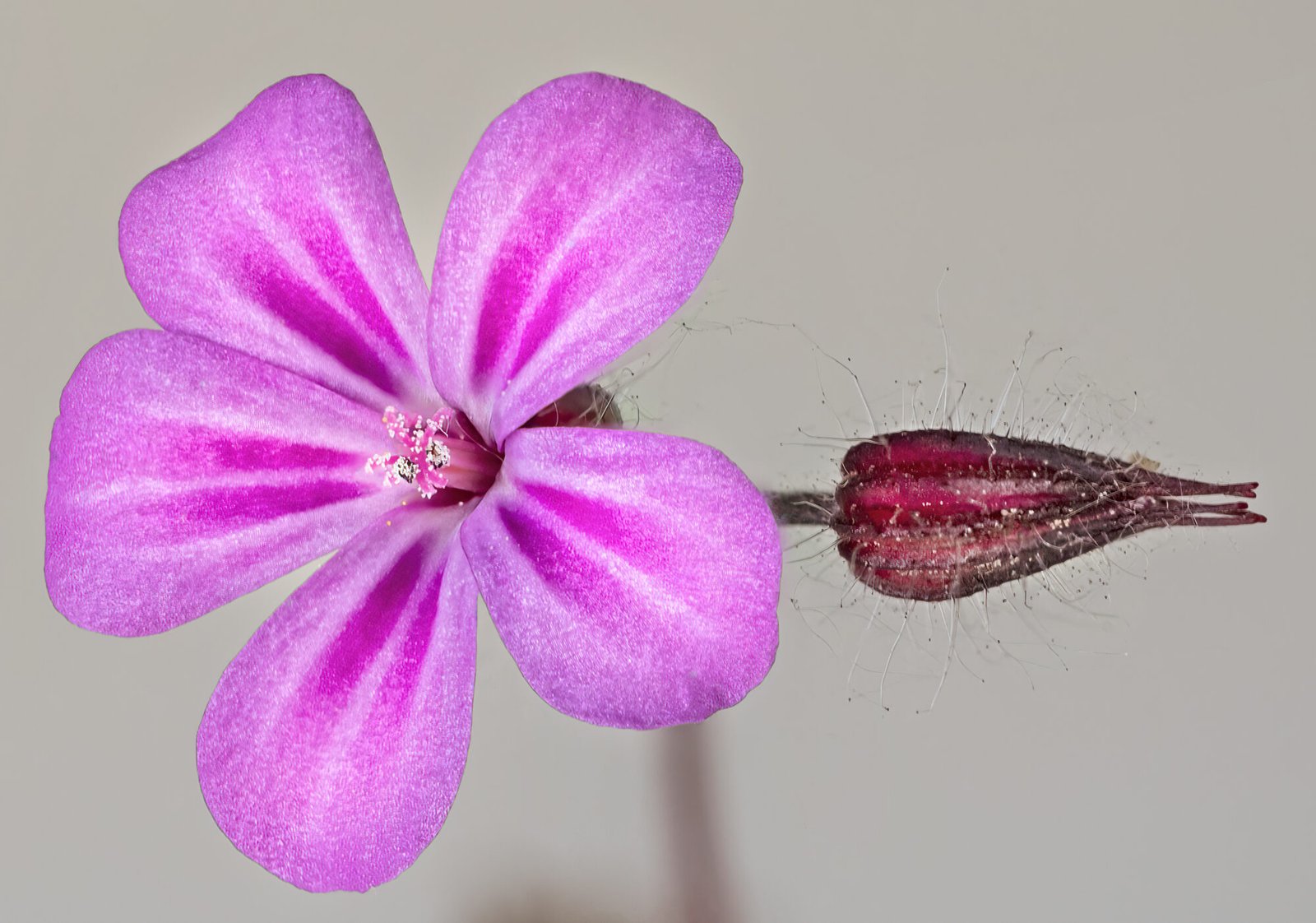
  • Geranium robertianum extract showed antioxidant, antibacterial, and antiproliferative activity

    Geranium robertianum extract showed antioxidant, antibacterial, and antiproliferative activity

    What the study found

    The study found that an ethanolic extract from the aerial parts of Geranium robertianum L. contained high levels of phenolic compounds and flavonoids, showed antioxidant and antibacterial activity, and reduced the growth of human salivary gland carcinoma cells. It also increased markers associated with oxidative stress and apoptosis, which is programmed cell death.

    Why the authors say this matters

    The authors say the plant remains understudied despite its use in traditional medicine and that it holds therapeutic potential. The study suggests the extract may be relevant because of its measured bioactivity against bacteria and A253 human salivary gland carcinoma cells.

    What the researchers tested

    The researchers analyzed an ethanolic extract made from the aerial parts of Geranium robertianum L. They measured phytochemical composition, antioxidant activity with DPPH, ABTS, and FRAP colorimetric assays, metal content, antibacterial activity, and effects on A253 human salivary gland carcinoma cells.

    What worked and what didn't

    The extract showed high phenolic and flavonoid content, and the ABTS assay indicated the highest antioxidant capacity among the tests used. It had moderate antibacterial activity against both Gram-positive and Gram-negative bacteria, with inhibition zones generally comparable to levofloxacin, but it was significantly less effective against P. aeruginosa. On A253 cells, it produced a dose-dependent antiproliferative effect, morphological changes, and increased ROS and caspase-3/7 and caspase-9 levels.

    What to keep in mind

    The abstract does not describe study limitations, and the findings are based on an extract tested in assays and on one cancer cell line. The summary also does not provide in vivo results or clinical testing.

    • The extract contained high levels of phenolic compounds and flavonoids.
    • ABTS showed the highest antioxidant capacity among the assays used.
    • The extract had moderate antibacterial activity, but it was less effective against P. aeruginosa.
    • In A253 human salivary gland carcinoma cells, the extract reduced cell growth in a dose-dependent way.
    • The extract increased ROS and caspase-3/7 and caspase-9 levels.
  • GaAs/GeSn-MQW/Ge photodiode shows low dark current

    What the study found

    The study reports a lattice-mismatched GaAs/GeSn-multi-quantum well (MQW)/Ge n-i-p heterojunction photodiode made by semiconductor grafting. It found an atomically clean interface, no observable interdiffusion, and strong optoelectronic performance.

    Why the authors say this matters

    The authors conclude that this provides a new strategy for building lattice-mismatched optoelectronic heterojunctions. They also say the approach may be a broadly applicable platform for high-performance device integration without the usual strict lattice-matching requirement.

    What the researchers tested

    The researchers used semiconductor grafting to create a single-crystalline GaAs/GeSn-MQW/Ge n-i-p heterojunction photodiode. They also used STEM, or scanning transmission electron microscopy, to examine the GaAs/GeSn-MQW interface.

    What worked and what didn't

    The device showed a dark current density of 1.22 × 10^-7 A/cm^2 and spectral response from about 0.5 to 2 µm. It also showed photo responsivities of 0.85 A/W at 520 nm and 0.40 A/W at 1570 nm. Compared with an epitaxial reference device, dark current was reduced by more than five orders of magnitude, and responsivity increased by about 7× in the visible range and about 3× in the near-infrared.

    What to keep in mind

    The abstract does not describe detailed experimental limits, failure modes, or long-term stability. The reported findings are specific to the GaAs/GeSn-MQW/Ge system described here.

    • A GaAs/GeSn-multi-quantum well/Ge n-i-p photodiode was created through semiconductor grafting.
    • STEM showed an atomically clean GaAs/GeSn-MQW interface with no observable interdiffusion.
    • The device had a record-low dark current density of 1.22 × 10^-7 A/cm^2.
    • The spectral response extended from about 0.5 to 2 µm.
    • Responsivity reached 0.85 A/W at 520 nm and 0.40 A/W at 1570 nm.
    • Compared with an epitaxial reference device, dark current dropped by over five orders of magnitude.
  • Leveling during airship ascent reduces climbing speed and supercooling

    What the study found

    The study found that including a leveling process in models of an airship’s non-forming ascent changes the predicted climb behavior. It shows that leveling increases the vertical projection area, lowers climbing velocity, and is associated with step-like changes in velocity and supercooling.

    Why the authors say this matters

    The authors conclude that their model offers insight into lateral control and pressure differential control of airships. They also say it may help with preventing cold adhesion during ascent.

    What the researchers tested

    The researchers proposed a leveling model based on the relationship between leveling and volume expansion, and integrated it into a thermal-flight dynamic coupled prediction model. They analyzed changes in temperature, velocity, and altitude during ascent, compared their results with those of other scholars, and examined different trigger volumes and leveling rates.

    What worked and what didn't

    For an airship with a volume of 8,578 m³ and a ceiling height of 19.5 km, the preformed minimum vertical velocity was 18.7% to 40% lower than in the nonleveling case, and the forming velocity was 20% lower. The leveling process also reduced volume expansion, delayed the start of super-pressure, and lessened the supercooling phenomenon; the helium gas supercooling temperature during forming was 16% higher. The velocity peak became a step-like pattern, and this effect was stronger when leveling happened earlier and more quickly.

    What to keep in mind

    The abstract does not describe limitations in detail. The reported percentages and behaviors are tied to the modeled airship conditions and the specific case of an 8,578 m³ airship with a 19.5 km ceiling height.

    • The study adds a leveling model to a thermal-flight dynamic coupled prediction model for airship ascent.
    • Leveling increases vertical projection area and reduces climbing velocity.
    • In the tested case, minimum vertical velocity was 18.7% to 40% lower than in the nonleveling case.
    • The forming velocity was 20% lower, and the velocity peak showed a step-like pattern.
    • Leveling reduced volume expansion, delayed super-pressure, and alleviated supercooling.
  • JPEG texture compression performs well for real-time rendering

    What the study found

    The study found that JPEG, a variable-rate compressed image format, can be used for real-time texture rendering on modern graphics processing units (GPUs). In the reported setup, it produced better quality and compression rates than BC1 and sometimes matched or exceeded ASTC, another texture compression format.

    Why the authors say this matters

    The authors conclude that sophisticated variable-rate compression schemes may be feasible on modern GPUs, even in virtual reality (VR). They frame this as relevant because JPEG is widely used for efficient image encoding but has not previously been used for real-time rendering because of the need for random access to individual texels, the small picture elements in a texture.

    What the researchers tested

    The researchers investigated the feasibility of using JPEG for variable-rate texture compression on modern GPUs and compared it with the GPU-friendly fixed-rate compression approaches BC1 and ASTC. They used a deferred rendering pipeline to identify the needed blocks for a frame, decode those blocks, and colorize the framebuffer's pixels.

    What worked and what didn't

    JPEG maintained significantly better quality and compression rates than BC1 in the reported comparison. Depending on the image type, it outperformed or competed with ASTC, and the JPEG rendering pipeline increased rendering duration by less than 0.3 ms on an NVIDIA RTX 4090.

    What to keep in mind

    The abstract does not describe detailed limitations beyond the need for an additional approximately 0.17 bit per pixel in the authors' approach. The findings are reported for the tested GPU pipeline and comparison formats named in the abstract.

    • JPEG was tested as a variable-rate texture compression format for real-time rendering.
    • The approach used a deferred rendering pipeline to decode only the needed blocks for each frame.
    • JPEG had better quality and compression rates than BC1 in the reported results.
    • JPEG sometimes outperformed or matched ASTC, depending on image type.
    • Rendering time increased by less than 0.3 ms on an NVIDIA RTX 4090.
  • Earliest octopuses were giant Cretaceous marine predators

    What the study found

    The study found evidence that the earliest finned octopuses, called Cirrata, were invertebrate top predators in Late Cretaceous oceans. The authors report that these animals may have reached about 7 to 19 meters in total length and could have rivaled giant marine reptiles.

    Why the authors say this matters

    The authors conclude that their findings show cephalopods, a group that includes octopuses, and marine vertebrates independently evolved powerful jaws and the loss of external skeletons to become large, intelligent predators. They suggest this changes the picture of who occupied the top of marine food chains during the so-called age of vertebrates.

    What the researchers tested

    The researchers examined exceptionally well-preserved fossil jaws from Late Cretaceous sediments, dated to about 100 to 72 million years ago. They used the jaws' size and wear patterns to identify the animals as early finned octopuses and to infer aspects of feeding behavior.

    What worked and what didn't

    The fossil jaws were large enough to support a calculated total length of about 7 to 19 meters. Extensive wear suggests the animals crushed hard skeletons, and asymmetric wear patterns indicate lateralized behavior, which the authors interpret as a sign of advanced intelligence.

    What to keep in mind

    The conclusions are based on fossil jaws and their wear, not on complete animals, so the rest of the body form is inferred rather than directly observed. The abstract does not describe other limitations.

    • The earliest finned octopuses are identified as top predators from the Late Cretaceous.
    • Fossil jaws show extensive wear consistent with crushing hard skeletons.
    • Asymmetric wear patterns are reported as evidence of lateralized behavior.
    • The animals are estimated to have been about 7 to 19 meters long.
    • The authors say cephalopods and marine vertebrates convergently evolved powerful jaws and loss of superficial skeletons.
  • Review summarizes BLS employment projection methods and updates

    What the study found

    The review summarizes the U.S. Bureau of Labor Statistics (BLS) employment projection methodologies and notes that recent methodological work identifies strengths, limitations, and opportunities for enhancement. It covers the main components used to project labor force, industry, and occupational employment.

    Why the authors say this matters

    The authors say the BLS Employment Projections program produces long-term forecasts that inform national policy and workforce development strategies. The study suggests this review can help explain how BLS methods might evolve while maintaining historical continuity and statistical rigor.

    What the researchers tested

    The paper is a comprehensive review of official BLS publications, including the Handbook of Methods, Monthly Labor Review articles, technical documentation, and working papers. It examines labor force projections using demographic models, macroeconomic projections of gross domestic product and its components, industry output and employment projections using input-output analysis, and occupational employment projections based on industry staffing patterns.

    What worked and what didn't

    The review synthesizes recent methodological innovations such as occupational separations methodology, gross flows estimation frameworks, Bayesian inference for survey estimation, hedonic quality adjustment methods, multiple imputation for missing data, and productivity measurement approaches. The abstract says these materials reveal strengths, limitations, and opportunities for enhancement, but it does not provide detailed comparative results for each method.

    What to keep in mind

    This is a review of documented BLS methods, not a new empirical evaluation reported in the abstract. The abstract does not describe specific quantitative findings, and it does not state detailed limitations beyond noting that the review identifies strengths, limitations, and opportunities for enhancement.

    • The paper reviews U.S. Bureau of Labor Statistics employment projection methodologies across multiple official sources.
    • It covers labor force, macroeconomic, industry, and occupational projection methods.
    • The review includes recent technical topics such as Bayesian inference, multiple imputation, and hedonic quality adjustment.
    • The authors say the BLS projections inform national policy and workforce development strategies.
    • The abstract says the review identifies strengths, limitations, and opportunities for enhancement.
  • Existence and uniqueness proved for anisotropic evolution equations

    What the study found

    The authors prove that solutions exist for a Cauchy-Dirichlet problem, which is a boundary-value problem posed with an initial condition and fixed boundary data, for a class of fully nonlinear anisotropic evolution equations. They also prove a comparison principle and conclude that the solutions are unique.

    Why the authors say this matters

    The authors conclude that these results establish existence, comparison, and uniqueness for this class of equations. The study suggests that the closeness assumption on the exponents is enough to guarantee that a certain power of the solution has a gradient.

    What the researchers tested

    The researchers studied the Cauchy-Dirichlet problem associated with fully nonlinear anisotropic evolution equations. Their results are obtained under a closeness assumption on the exponents.

    What worked and what didn't

    The paper reports existence of solutions, a comparison principle, and uniqueness of solutions. It also states that the required closeness assumption on the exponents guarantees that a certain power of the solution has a gradient.

    What to keep in mind

    The abstract does not describe specific examples, numerical experiments, or applications. It also does not give the details of the closeness assumption beyond stating that it applies to the exponents.

    • Solutions exist for the Cauchy-Dirichlet problem in a class of fully nonlinear anisotropic evolution equations.
    • A comparison principle is proved for the same class of equations.
    • The authors conclude that the solutions are unique.
    • The results depend on a closeness assumption on the exponents.
    • That assumption guarantees that a certain power of the solution has a gradient.
  • Lateral extra-articular tenodesis improved stability after ACL reconstruction

    What the study found

    The study found that anterior cruciate ligament reconstruction (ACL reconstruction, a surgical repair of the main knee ligament) alone did not fully restore knee stability in cadaveric knees. Adding lateral extra-articular tenodesis (a procedure that reinforces the outer side of the knee) restored several stability measures to levels comparable with the intact knee, and lateral meniscus posterior root repair was especially important for valgus rotation during pivot shift.

    Why the authors say this matters

    The authors conclude that both lateral meniscus posterior root repair and anterolateral corner reconstruction are needed to restore stability in knees with anterior cruciate ligament, Kaplan fiber, and lateral meniscus posterior root injuries. The study suggests these structures play secondary stabilizing roles in internal rotation and pivot shift loading.

    What the researchers tested

    The researchers studied ten paired cadaveric knees in a six degrees of freedom robotic system. They sequentially sectioned the anterior cruciate ligament, lateral meniscus posterior root, and Kaplan fibers, then tested the knees after anterior cruciate ligament reconstruction, lateral meniscus posterior root repair, modified Lemaire lateral extra-articular tenodesis, or combinations of these procedures. Tibial displacement and rotation were measured under internal rotation torque and a simulated pivot shift from 0° to 90° of knee flexion.

    What worked and what didn't

    Anterior cruciate ligament reconstruction alone left significant residual increases in isolated internal rotation, coupled internal rotation, coupled anterior tibial translation, and coupled valgus rotation during pivot shift. Adding modified Lemaire lateral extra-articular tenodesis, with or without lateral meniscus posterior root repair, restored isolated internal rotation, coupled internal rotation, and coupled anterior tibial translation to values comparable with the intact knee. Lateral meniscus posterior root repair in the setting of anterior cruciate ligament reconstruction and Kaplan fiber injury restored valgus rotation stability at most flexion angles.

    What to keep in mind

    This was a cadaveric biomechanical study, so the findings describe mechanical behavior rather than patient outcomes. The abstract does not describe clinical follow-up, and it does not provide limitations beyond the study setting.

    • ACL reconstruction alone did not fully restore knee stability in the cadaveric knees.
    • Adding modified Lemaire lateral extra-articular tenodesis restored several stability measures to levels comparable with the intact knee.
    • Lateral meniscus posterior root repair was most important for valgus rotation stability during pivot shift.
    • Kaplan fibers contributed additively to internal rotation and pivot shift loading in the ACL-deficient knee.
    • The study used ten paired cadaveric knees tested in a robotic system across 0° to 90° of knee flexion.