Blog

  • Review finds neurophysiological markers remain established schizophrenia endophenotypes

    What the study found

    The review finds that oculomotor measures, event-related potentials, and cognitive deficits are supported as established endophenotypes for schizophrenia. Evidence for social cognition markers is more mixed, with Theory of Mind and emotion processing showing promise, but social perception and attributional bias remaining inconsistent.

    Why the authors say this matters

    The authors conclude that integrating these markers is relevant for stratified psychiatry and treatment personalization. They also suggest that some endophenotypes may reflect shared neural vulnerabilities across the schizoaffective spectrum.
    What the researchers tested

    The researchers conducted a narrative mini-review of recent evidence. They examined neurophysiological, neuropsychological, and social-cognitive parameters as candidate endophenotypes for schizophrenia, with endophenotypes defined as intermediate links between the disorder's polygenic architecture and clinical features.

    What worked and what didn't

    The review says there is ample evidence for oculomotor measures, event-related potentials, and cognitive deficits as endophenotypes found consistently in affected individuals and first-degree relatives. In social cognition, results are more heterogeneous: Theory of Mind and emotion processing appear promising, while evidence for social perception and attributional bias is inconsistent.

    What to keep in mind

    This is a narrative mini-review, so its conclusions depend on the studies it summarizes. The abstract notes that social cognition components still require further validation, and it does not provide detailed limitations beyond that.

    • Oculomotor measures, event-related potentials, and cognitive deficits are described as established schizophrenia endophenotypes.
    • Social cognition findings are mixed overall.
    • Theory of Mind and emotion processing are presented as promising candidate endophenotypes.
    • Evidence for social perception and attributional bias is inconsistent.
    • The authors link these markers to stratified psychiatry and treatment personalization.

  • Government effectiveness is linked to stronger logistics performance

    What the study found

    The study found that government effectiveness is a strong positive correlate of national logistics performance. The authors also report that this relationship remains stable across several statistical approaches.

    Why the authors say this matters

    The authors conclude that strengthening state capability may produce meaningful gains in logistics performance beyond income and trade levels. They also state that state capability is a critical enabler of supply chain reliability and resilience in international trade.

    What the researchers tested

    The researchers analyzed a biennial panel of 138 countries from 2007 to 2018. They linked the World Bank’s Logistics Performance Index (LPI, a measure of how well a country’s logistics system works) to macroeconomic, financial, and institutional factors, and tested the data with generalized estimating equations, fixed-effects models with Driscoll–Kraay errors, and an equally spaced AR(1) robustness subset.

    What worked and what didn't

    Government effectiveness was reported as strongly and consistently positive across the main models, including generalized estimating equations with year effects. Trade openness, control of corruption, human capital, employment, remittances, and domestic credit were included as controls and retained expected signs. The abstract does not report any predictors that clearly failed or any negative main findings.

    What to keep in mind

    The summary does not describe detailed effect sizes, model coefficients, or country-specific exceptions. Limitations are not described in the available abstract.

    • Government effectiveness was the key predictor of higher logistics performance.
    • The analysis covered 138 countries over 2007–2018.
    • The relationship remained positive across generalized estimating equations, fixed-effects models, and a robustness subset.
    • Control variables such as trade openness and human capital were included and had expected signs.
    • The authors state that state capability may support supply chain reliability and resilience in international trade.
  • Community practices reduced the gender divide in paid and unpaid labour

    What the study found

    The study found evidence that subversive, collective action at the interactional level can redo gender at the wider institutional level. In the community studied, interdependent practices were associated with sustained structural and cultural changes, while also creating conditions for gender-atypical behaviour in everyday interactions.

    Why the authors say this matters

    The authors conclude that a community-wide approach may help transcend the gender division of paid and unpaid labour. They suggest that when people become accountable to revised norms for gender-appropriate behaviour, gender may become less important in how work is divided between women and men.

    What the researchers tested

    The researchers used participant observation and interviews in a large community described as unique for enacting gender egalitarianism. They examined a set of collectively designed and undertaken practices, including uniform working hours and earnings for all members, communal provision of domestic labour such as childcare, and a 50:50 gender quota for representative positions supported by role rotation.

    What worked and what didn't

    The study reports that these interdependent practices were linked to sustained structural and cultural changes at the institutional level. It also says these changes created conditions for gender-atypical behaviour at the interactional level, and that the two processes of 'redoing' gender were mutually reinforcing.

    What to keep in mind

    The abstract does not describe limitations, comparison groups, or measures of how large the changes were. The findings come from one large community described as unique, so the available summary does not show how broadly they apply.

    • Subversive collective action was linked to changes in gender norms at the institutional level.
    • Uniform working hours and earnings were one of the practices described.
    • Childcare and other domestic labour were provided communally.
    • Representative positions used a 50:50 gender quota with role rotation.
    • The two forms of 'redoing' gender were described as mutually reinforcing.
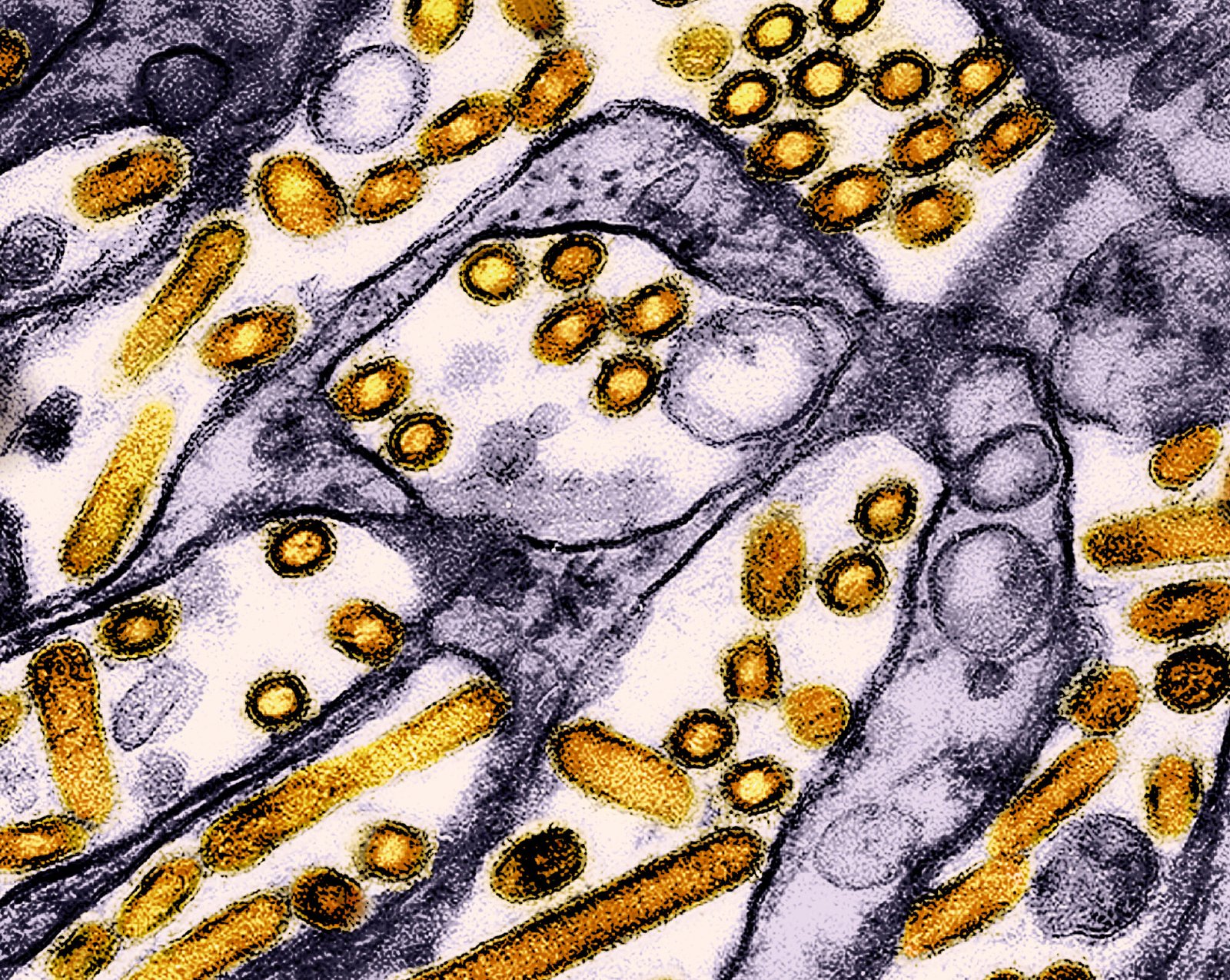
  • H5N1 risk expanded in multiple regions after 2020

    H5N1 risk expanded in multiple regions after 2020

    What the study found

    The study found that ecological suitability for highly pathogenic avian influenza H5 circulation increased after 2020 in Europe, Asia, and the Americas. It also found that the factors associated with risk shifted, with intensive chicken density and cultivated vegetation becoming more influential after 2020.

    Why the authors say this matters

    The authors conclude that these results add to understanding of highly pathogenic avian influenza epidemiology. They also state that the findings identify regions where surveillance and control measures should be prioritised.

    What the researchers tested

    The researchers used ecological niche modelling, which examines environmental conditions linked to where a disease occurs. They built models for highly pathogenic avian influenza cases in wild and domestic birds across two periods, 2015–2020 and 2020–2022, using environmental predictors such as chicken and duck population density, human density, distance to water bodies, and land cover variables.

    What worked and what didn't

    The models showed increased relative influence after 2020 from intensive chicken population density and cultivated vegetation. Wild bird H5 occurrences were primarily correlated with urban areas and open water regions, and more avian species, particularly sea birds, were affected post-2020.

    What to keep in mind

    The abstract does not describe study limitations in detail. The findings are based on ecological niche models and the periods and species groups described in the abstract.

    • Ecological suitability for HPAI H5 circulation increased after 2020 in Europe, Asia, and the Americas.
    • Intensive chicken population density and cultivated vegetation became more influential predictors post-2020.
    • Wild bird H5 occurrences were mainly linked to urban areas and open water regions.
    • More avian species, especially sea birds, were affected after 2020.
    • The authors say the results can help prioritize surveillance and control measures.
  • Carnitine metabolism differs in postpartum cardiomyopathy

    What the study found

    The study found that postpartum cardiomyopathy (PPCM), a rare condition with left ventricular dysfunction occurring around childbirth, was associated with distinct changes in serum carnitine and acylcarnitine levels. Several metabolites differed between PPCM patients and healthy controls, and some of these showed limited diagnostic performance.

    Why the authors say this matters

    The authors conclude that the findings highlight the utility of targeted metabolomics, a method for measuring specific small molecules, in identifying new metabolic signatures of cardiomyopathy. They suggest that metabolites such as C2, C6DC, and C16 may be potential biomarker candidates for PPCM diagnosis and prognosis.

    What the researchers tested

    The researchers compared serum carnitine and acylcarnitine profiles in 40 PPCM patients and 40 age-matched healthy controls. They used LC–MS/MS, a mass spectrometry method, along with PCA, PLS-DA, statistical tests, and ROC curve analysis to look for metabolites that could distinguish the groups.

    What worked and what didn't

    PPCM patients had significantly lower free carnitine (C0) and higher acetylcarnitine (C2) and propionylcarnitine (C3) than controls. C14:1 and C18:1 were also significantly reduced, while C6DC was elevated; PLS-DA and VIP analyses highlighted C2, C6DC, and C16 as key discriminators. ROC analysis showed only limited diagnostic performance for these metabolites, with AUC values of 0.633 for C2, 0.635 for C6DC, and 0.623 for C16.

    What to keep in mind

    The study compared a relatively small group of 40 patients with 40 controls, and the abstract does not describe validation in an independent dataset. The available summary does not report other limitations.

    • PPCM patients showed lower free carnitine (C0) than healthy controls.
    • Short-chain acylcarnitines such as C2 and C3 were elevated in PPCM.
    • Long-chain acylcarnitines C14:1 and C18:1 were reduced, while C6DC was increased.
    • C2, C6DC, and C16 were highlighted as key discriminators in multivariate analyses.
    • ROC analysis found only limited diagnostic performance for the top metabolites.
  • PFAS aerosols favored fine particles and pulmonary deposition

    What the study found

    The study found that many per- and polyfluoroalkyl substances (PFAS, persistent synthetic chemicals) formed aerosols mainly in fine particles, with a peak around 0.3 micrometers. The authors also report that a model bacterium, Pseudomonas fluorescens, did not noticeably increase PFAS aerosol formation or shift particle sizes under the conditions tested.

    Why the authors say this matters

    The authors conclude that their findings have implications for airborne transport and inhalation exposure from contaminated aqueous sources. The study suggests that understanding how PFAS behave in air may help assess how these chemicals move through the atmosphere and where they may deposit in the lungs.

    What the researchers tested

    The researchers studied aerosolisation and size-resolved behaviour of 25 PFAS, including short-, medium-, and long-chain perfluoroalkyl carboxylic acids, perfluoroalkane sulfonates, fluorotelomer sulfonates, and emerging alternatives. They ran controlled chamber experiments in a water–organic solvent system, both without and with Pseudomonas fluorescens seed, and used Multiple-Path Particle Dosimetry (MPPD) modelling to estimate inhalation deposition.

    What worked and what didn't

    Most PFAS showed unimodal mass–size distributions peaking at 0.3 micrometers, indicating dominant association with the fine mode. Sulfonated PFAS had broadly similar aerosol-phase concentrations across chain lengths, while perfluoroalkyl carboxylic acids showed increasing aerosolisation with longer chains. PFOS showed additional ultrafine enrichment, 6:2 fluorotelomer sulfonate and NaDONA had broader size profiles, and the bacterium did not enhance PFAS aerosol concentrations or show enrichment at the bacterial size mode.

    What to keep in mind

    The findings come from controlled chamber experiments in a specific water–organic solvent system, so they apply to the tested conditions rather than all real-world environments. The abstract does not describe other limitations beyond the tested conditions.

    • Most of the 25 tested PFAS aerosolised mainly in fine particles, peaking at about 0.3 micrometers.
    • Perfluoroalkyl carboxylic acids aerosolised more as chain length increased, while sulfonated PFAS were broadly similar across chain lengths.
    • PFOS showed extra enrichment in ultrafine particles, and 6:2 fluorotelomer sulfonate and NaDONA had broader size distributions.
    • Pseudomonas fluorescens did not increase PFAS aerosol concentrations or shift modal particle diameters under the tested conditions.
    • MPPD modelling predicted substantial deposition of aerosol-bound PFAS in the pulmonary region, especially for ultrafine-enriched compounds.
  • Organocatalytic esterification produced phosphinate esters from P(O)-OH compounds

    What the study found

    The study reports a metal-free organocatalytic method for directly esterifying P(O)-OH compounds with alcohols to make phosphinate esters. The authors describe it as sustainable and scalable, with moderate to excellent yields for 39 organophosphinates.

    Why the authors say this matters

    The authors say the method provides a sustainable and scalable route to phosphinate esters. The study suggests this is environmentally benign because it avoids strong oxidants, halides, and bases.

    What the researchers tested

    The researchers introduced a catalytic variant of the Mitsunobu reaction to organophosphorus chemistry, using a carbonyl group-containing P=O catalyst and Dean-Stark water removal. They tested direct esterification of P(O)-OH compounds with alcohols and examined the mechanism with DFT calculations (density functional theory, a computational chemistry method).

    What worked and what didn't

    The protocol showed remarkable functional group tolerance and produced 39 organophosphinates in moderate to excellent yield. The abstract does not describe specific substrates that failed or cases with low performance.

    What to keep in mind

    The available summary does not give detailed substrate-by-substrate limitations or examples of unsuccessful reactions. It also does not provide experimental conditions, reaction times, or comparative performance against other methods beyond the stated absence of strong oxidants, halides, or bases.

    • A metal-free organocatalytic route was reported for direct esterification of P(O)-OH compounds with alcohols.
    • The method was described as a sustainable and scalable way to make phosphinate esters.
    • The authors report 39 organophosphinates were synthesized in moderate to excellent yield.
    • The protocol is said to avoid strong oxidants, halides, and bases.
    • DFT calculations supported a mechanism involving dehydration, ligand exchange, proton transfer, and ring-opening.
  • Critically ill COVID-19 trial participants often did not understand consent details

    What the study found

    The study found that critically ill patients who joined a COVID-19 clinical trial in Japan often had poor understanding of the trial details. Some participants were not aware they had consented to take part.

    Why the authors say this matters

    The authors conclude that informed consent for critically ill patients during health emergencies needs improvement. They suggest future research should help optimize consent and ongoing patient support to balance autonomy and public health needs.

    What the researchers tested

    The researchers used a qualitative method called conventional content analysis. They interviewed 10 participants from the anticoagulation domain of REMAP-CAP, an international randomized trial for COVID-19 treatments, all of whom had been hospitalized in a Japanese intensive care unit, judged competent, and given prospective informed consent.

    What worked and what didn't

    Three main categories were identified: participation without awareness or adequate understanding, interpretation of participation through personal circumstances, and emotions and thoughts evoked by participation. Details of the trial or interventions were poorly understood, and some participants were unaware they had consented; some were interested in future trials, while others remained uncertain about their experience.

    What to keep in mind

    The report is based on 10 participants from one trial domain in Japan, so the findings are limited to this group. The abstract does not describe additional limitations beyond the study’s small qualitative sample.

    • Ten critically ill COVID-19 trial participants in Japan were interviewed.
    • Many participants had poor understanding of the trial details.
    • Some participants did not realize they had consented to join the study.
    • The study identified mixed feelings about participation, including uncertainty and interest in future trials.
    • The authors say informed consent and ongoing support should be improved in health emergencies.
  • Local air pollution reduces expatriate deployment

    Local air pollution reduces expatriate deployment

    What the study found

    The study found that local air pollution is associated with lower expatriate deployment in multinational enterprises (MNEs), meaning firms place fewer expatriates in their foreign subsidiaries when air pollution is higher. The abstract also reports that this negative relationship depends on the MNE’s local experience, local talent supply, and possibly industry pollution levels.

    Why the authors say this matters

    The authors say the findings matter because they add to research on the microfoundations of internalization theory by including bounded reliability, a concept about limits in how reliably parties fulfill contracts and obligations. They also conclude that the study adds to expatriate management research by showing how local air pollution, as part of the natural environment, can affect expatriates and MNE governance.

    What the researchers tested

    The researchers used interviews with current and former expatriates to understand how air pollution affects attitudes toward international assignments. They then tested hypotheses with archival data from Japanese MNE subsidiaries in Chinese cities, using a meteorology-based instrumental variable to reduce potential endogeneity problems.

    What worked and what didn't

    The interviews indicated that expatriates perceive local air pollution as a severe stressor and that this lowers their commitment to international assignments. The quantitative analysis found that local air pollution significantly reduces expatriate deployment. The abstract further reports that the negative relationship is contingent on the MNE’s local experience and local talent supply, and may also be influenced by industry pollution levels.

    What to keep in mind

    The abstract does not provide detailed limitations beyond noting the use of an instrumental-variable approach to address potential endogeneity. The quantitative evidence described is based on Japanese MNE subsidiaries in Chinese cities, so the stated scope in the abstract is specific to that setting.

    • Local air pollution was found to significantly reduce expatriate deployment.
    • Interviews suggested expatriates view air pollution as a severe stressor that lowers commitment to overseas assignments.
    • The negative relationship varied with the MNE’s local experience and local talent supply.
    • Industry pollution levels may also influence the relationship.
    • The study used archival data from Japanese MNE subsidiaries in Chinese cities.
  • Blockchain-secured energy trading improved V2G attack resilience

    Blockchain-secured energy trading improved V2G attack resilience

    What the study found

    The study found that the EPGA-BET framework, which combines ensemble optimization with blockchain-secured energy trading, improved performance in vehicle-to-grid networks under attack scenarios. The abstract says the system showed statistically significant gains in operational cost, resilience index, detection latency, and transaction success rate.

    Why the authors say this matters

    The authors conclude that combining ensemble intelligence, evolutionary algorithms, and blockchain can provide a strong, adaptive, and secure foundation for next-generation vehicle-to-grid networks. The study suggests this is relevant because electric vehicle vehicle-to-grid systems face planned cyber-physical attacks and fraudulent transactions.

    What the researchers tested

    The researchers tested an Ensemble Particle Swarm-Genetic Algorithm with Blockchain-Secured Energy Trading, called EPGA-BET. The framework uses Particle Swarm Optimization, Genetic Algorithm operators, and a quantum-inspired Particle Swarm Optimization formulation for optimization, plus a permissioned blockchain with Practical Byzantine Fault Tolerance consensus and Merkle-tree verification for transaction integrity, and a reinforcement learning module for anomaly-aware adaptation.

    What worked and what didn't

    Comparative experiments against established baseline strategies showed statistically significant improvements in the listed performance measures under attack scenarios. Ablation analysis indicated that the main performance gains came from the Particle Swarm Optimization–Genetic Algorithm ensemble and the adaptive reinforcement learning mechanism, while blockchain improved transactional trust without affecting optimization convergence.

    What to keep in mind

    The abstract does not describe the specific datasets, attack types, or experimental settings in detail. It also presents the results as coming from comparative experiments and ablation analysis, but broader real-world scope limits are not described in the available summary.

    • The framework is designed for vehicle-to-grid networks facing cyber-physical attacks and fraudulent transactions.
    • EPGA-BET combines Particle Swarm Optimization, Genetic Algorithm operators, a quantum-inspired Particle Swarm Optimization formulation, blockchain, and reinforcement learning.
    • Permissioned blockchain, Practical Byzantine Fault Tolerance, and Merkle-tree verification are used to support transaction integrity and fault tolerance.
    • The abstract reports statistically significant improvements in operational cost, resilience index, detection latency, and transaction success rate.
    • Ablation analysis attributed the main gains to the optimization ensemble and adaptive reinforcement learning, not to blockchain-driven changes in optimization convergence.