Author: editor@focalinterest.com

  • Modular symmetry supports quintessence and de Sitter vacua

    What the study found

    The study found that a modular-invariant scalar potential in heterotic orbifolds can produce a rich set of vacua, including anti-de Sitter minima, unstable de Sitter saddle points, and regions supporting multifield hilltop quintessence. The authors also report that all of their solutions satisfy refined swampland de Sitter bounds, where the swampland conjectures are criteria used in string theory to test whether low-energy models fit with quantum gravity.

    Why the authors say this matters

    The authors conclude that modular symmetry can help guide the construction of controlled, string-motivated quintessence scenarios within consistent effective theories. They also say the topic is relevant because modular invariance constrains effective theories and is important in the context of swampland conjectures and flavour physics.

    What the researchers tested

    The researchers examined a modular-invariant scalar potential arising from heterotic orbifolds, using a string-inspired truncation with two moduli, meaning two parameters that describe the shape or size of the compactified extra dimensions. They studied how the flavour structure and moduli dynamics are shaped by the underlying geometry.

    What worked and what didn't

    They found large regions in moduli space, the space of possible values of the moduli fields, that support multifield hilltop quintessence consistent with observations. They also found anti-de Sitter minima and unstable de Sitter saddle points, but the abstract does not describe any stable de Sitter minimum.

    What to keep in mind

    The analysis is based on a string-inspired two-moduli truncation, so it covers a simplified version of the full theory. The abstract does not give details on the specific observational tests, model parameters, or any limitations beyond this scope.

    • A modular-invariant scalar potential from heterotic orbifolds was studied.
    • The potential showed anti-de Sitter minima and unstable de Sitter saddle points.
    • Large regions in moduli space supported multifield hilltop quintessence consistent with observations.
    • All reported solutions satisfied refined swampland de Sitter bounds.
    • The authors say modular symmetry can help build controlled, string-motivated quintessence scenarios.
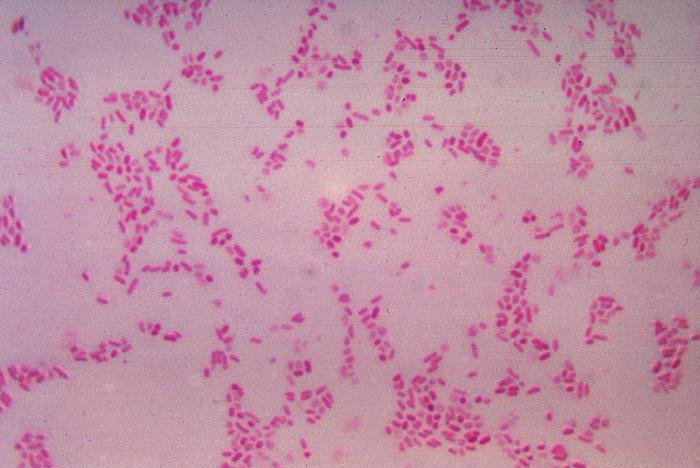
  • Review links gut microbiome metabolites to acute lymphoblastic leukemia

    Review links gut microbiome metabolites to acute lymphoblastic leukemia

    What the study found

    The review finds that evidence connecting the gastrointestinal microbiome and its short-chain fatty acids, or SCFAs, to acute lymphoblastic leukemia is emerging but still limited. The authors suggest SCFAs may be involved in treatment response, treatment-related toxicity, treatment-related morbidity, and early-life factors linked to leukemia risk.

    Why the authors say this matters

    The authors conclude that SCFAs represent a compelling and underexplored axis for microbiome-acute lymphoblastic leukemia research. They suggest this line of study could help define the therapeutic potential of microbial-derived metabolites in this disease.

    What the researchers tested

    This is a narrative review, not an original experiment. The authors critically examined the available evidence on SCFAs in acute lymphoblastic leukemia and integrated mechanistic insights from metabolic, immunological, and oncological studies.

    What worked and what didn't

    The review reports that direct acute lymphoblastic leukemia-specific evidence is sparse. At the same time, the authors propose biologically plausible pathways by which SCFAs may influence treatment response and toxicity, based on broader related studies.

    What to keep in mind

    The abstract does not describe new patient data or experimental results. It also states that direct evidence specific to acute lymphoblastic leukemia remains limited, so the proposed roles of SCFAs are not yet established.

    • The article is a narrative review about the gastrointestinal microbiome, short-chain fatty acids, and acute lymphoblastic leukemia.
    • The authors say direct acute lymphoblastic leukemia-specific evidence for short-chain fatty acids is sparse.
    • They propose that short-chain fatty acids may affect treatment response and therapy-related toxicity.
    • The review also suggests possible links to treatment-related morbidity and early-life factors associated with leukemia risk.
    • The authors call short-chain fatty acids an underexplored research area in acute lymphoblastic leukemia.
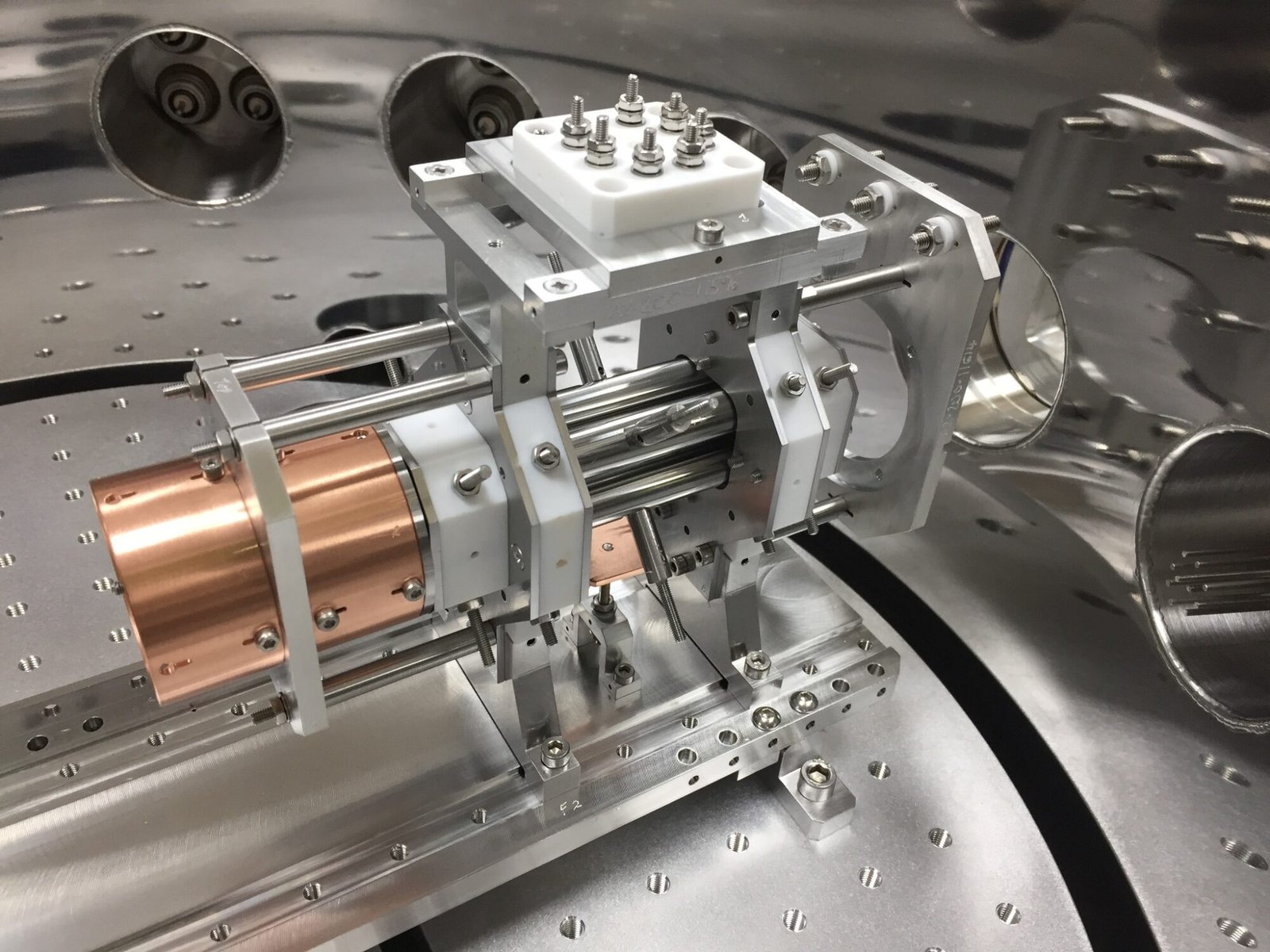
  • Review of reaction control in radiofrequency ion traps

    Review of reaction control in radiofrequency ion traps

    What the study found

    The review concludes that radiofrequency ion traps offer a high degree of control over ion-molecule reaction dynamics. It summarizes ways to control internal quantum states, collision energies, and molecular structure in these systems.

    Why the authors say this matters

    The authors suggest that this control is relevant for studying quantum-state-dependent kinetics, quantum resonance effects, and structure-sensitive reactivity in ion-neutral collisions. They also conclude that it points to future work on full state-to-state reaction mapping, the ultracold quantum regime, and complex and chiral systems.

    What the researchers tested

    This is a review article, not an original experiment. The authors summarize prior techniques for trapping and cooling atomic and molecular ions, including Doppler and resolved-sideband laser cooling, sympathetic cooling, and cryogenic buffer-gas methods.

    What worked and what didn't

    The review describes several strategies that have been used to control reactions: internal cooling, optical pumping, state-selective photoionization, quantum logic spectroscopy, micromotion control, dynamic trapping, combination with molecular beams, isotopic substitution, conformational separation, and isomer-specific ion generation. It also notes applications in studies of quantum-state-dependent kinetics, quantum resonance effects, and structure-sensitive reactivity.

    What to keep in mind

    The article is a review, so its content depends on previously published studies rather than a single new experiment. The abstract does not describe specific quantitative results or detailed limitations beyond noting future challenges such as eliminating micromotion and reaching the ultracold quantum regime.

    • Radiofrequency ion traps are presented as a platform for controlling ion-molecule reaction dynamics.
    • The review covers trapping and cooling methods such as Doppler cooling, resolved-sideband laser cooling, sympathetic cooling, and cryogenic buffer-gas methods.
    • The authors describe ways to control reaction parameters through internal quantum states, collision energies, and molecular structure.
    • Applications discussed include quantum-state-dependent kinetics, quantum resonance effects, and structure-sensitive reactivity.
    • Future challenges include full state-to-state reaction mapping and reaching the ultracold quantum regime without micromotion.
  • Next-to-leading power terms are significant in slepton pair production

    What the study found

    The study finds that next-to-leading power contributions in the threshold variable can be significant for inclusive slepton pair production. It also reports that existing calculations may underestimate the scale error for large slepton masses.

    Why the authors say this matters

    The authors note that cross sections near threshold are sensitive to large logarithmic terms that must be resummed to all orders in perturbation theory. The study suggests that including next-to-leading power effects is important for assessing the reliability of predictions, especially for large slepton masses.

    What the researchers tested

    The researchers evaluated the next-to-leading power contribution in the threshold variable to leading logarithmic accuracy for inclusive slepton pair production at hadron colliders. They also included results for a potential future FCC-hh machine at 85 TeV.

    What worked and what didn't

    The next-to-leading power contributions were found to be significant compared with the next-to-leading logarithmic terms at leading power. The abstract also states that existing calculations underestimate the scale error for large slepton masses.

    What to keep in mind

    The available summary does not describe detailed numerical values, experimental data, or a full comparison across all parameter ranges. It also does not provide additional limitations beyond the focus on leading logarithmic accuracy and the specific collider scenarios studied.

    • Next-to-leading power contributions in the threshold variable can be significant.
    • These contributions were evaluated for inclusive slepton pair production at hadron colliders.
    • Existing calculations may underestimate the scale error for large slepton masses.
    • The study includes results for a future FCC-hh machine at 85 TeV.
    • The work focuses on leading logarithmic accuracy near threshold.
  • Barium promoted alkylation of isatin derivatives was achieved

    What the study found

    The study found that Barbier-type alkylation of isatin derivatives could be achieved using metallic barium as the promoter. The reaction was reported to work with selected alkyl iodides and benzylic or prenylic bromides.

    Why the authors say this matters

    The authors do not state a broader application or significance beyond showing that metallic barium can promote this type of alkylation. The findings indicate a new promoter for this reaction class.

    What the researchers tested

    The researchers tested Barbier-type alkylation of isatin derivatives with alkyl halides under metallic barium-promoted conditions. The abstract says the halides included alkyl iodides and benzylic bromides, as well as prenylic bromides.

    What worked and what didn't

    The reaction worked with selected alkyl iodides and with benzylic and prenylic bromides under metallic barium-promoted Barbier-type conditions. The abstract does not describe failures, yields, or cases where the method did not work.

    What to keep in mind

    The abstract describes the reaction as applicable only to selected substrates, so the scope appears limited. No further limitations, performance details, or mechanistic explanation are provided in the available summary.

    • Metallic barium was used to promote Barbier-type alkylation of isatin derivatives.
    • The reaction was reported for selected alkyl iodides.
    • Benzylic bromides and prenylic bromides were also included in the reported scope.
    • The abstract does not give yields, side reactions, or failed examples.
  • GPT-o1 outperformed Llama-3.2-8b-instruct in causal reasoning

    What the study found

    GPT-o1 performed better than Llama-3.2-8b-instruct on clinically grounded laboratory test scenarios that examined causal reasoning. The models were tested across association, intervention, and counterfactual reasoning, and GPT-o1 had higher scores in each area.

    Why the authors say this matters

    The authors conclude that GPT-o1 offers more consistent causal reasoning. They also state that further refinement is needed before high-stakes clinical deployment.

    What the researchers tested

    The researchers evaluated 99 laboratory test scenarios mapped to Pearl's Ladder of Causation, a framework with three levels: association, intervention, and counterfactual reasoning. The scenarios focused on common tests such as hemoglobin A1c (HbA1c), creatinine, and vitamin D, paired with factors like age, gender, obesity, and smoking. Two large language models, GPT-o1 and Llama-3.2-8b-instruct, were rated by four medically trained human experts.

    What worked and what didn't

    GPT-o1 had higher overall discriminative performance, with AUROC (area under the receiver operating characteristic curve, a measure of classification performance) of 0.80 ± 0.12 versus 0.73 ± 0.15 for Llama-3.2-8b-instruct. It also scored higher on association, intervention, and counterfactual reasoning, and had higher sensitivity and specificity. Both models performed best on intervention questions and worst on counterfactual questions, especially altered outcome scenarios.

    What to keep in mind

    The abstract does not describe limitations beyond noting that further refinement is needed before high-stakes clinical deployment. The study summary provided here is limited to the tested scenarios, the two models, and the expert ratings reported in the abstract.

    • The study compared GPT-o1 and Llama-3.2-8b-instruct on 99 clinical laboratory test scenarios.
    • GPT-o1 scored higher than Llama-3.2-8b-instruct on overall AUROC, sensitivity, and specificity.
    • Both models did best on intervention questions and worst on counterfactual questions.
    • The scenarios used common lab tests including HbA1c, creatinine, and vitamin D.
    • The authors say more refinement is needed before high-stakes clinical deployment.
  • Rectangle partitions extend the partition function geometrically

    What the study found

    The paper introduces a geometric extension of the partition function by studying how to count partitions of a rectangle into rectangular blocks with integer sides. In this setting, partitions are treated as the same if they contain the same multiset of blocks, regardless of their arrangement.

    Why the authors say this matters

    The authors present this as a natural geometric extension of the partition function. The study suggests that counting rectangle partitions may provide a broader way to think about partitioning beyond the usual numerical setting.

    What the researchers tested

    The researchers investigated the problem of counting partitions of a rectangle into smaller rectangles with integer side lengths. They defined two partitions as indistinguishable when they have the same collection of blocks, even if those blocks are arranged differently.

    What worked and what didn't

    The abstract reports the introduction of the counting problem and its equivalence rule for comparing partitions. It does not state specific formulas, examples, or comparative results.

    What to keep in mind

    The available summary is very brief and does not describe detailed results, methods, or limitations. It also does not say whether the paper resolves the counting problem or only sets it up.

    • The paper studies partitions of a rectangle into smaller rectangular blocks with integer sides.
    • Partitions with the same multiset of blocks are treated as identical, even if arranged differently.
    • The authors describe this as a natural geometric extension of the partition function.
    • The abstract does not report specific formulas or computed counts.
    • The abstract does not state limitations or scope beyond the rectangle-partition setting.
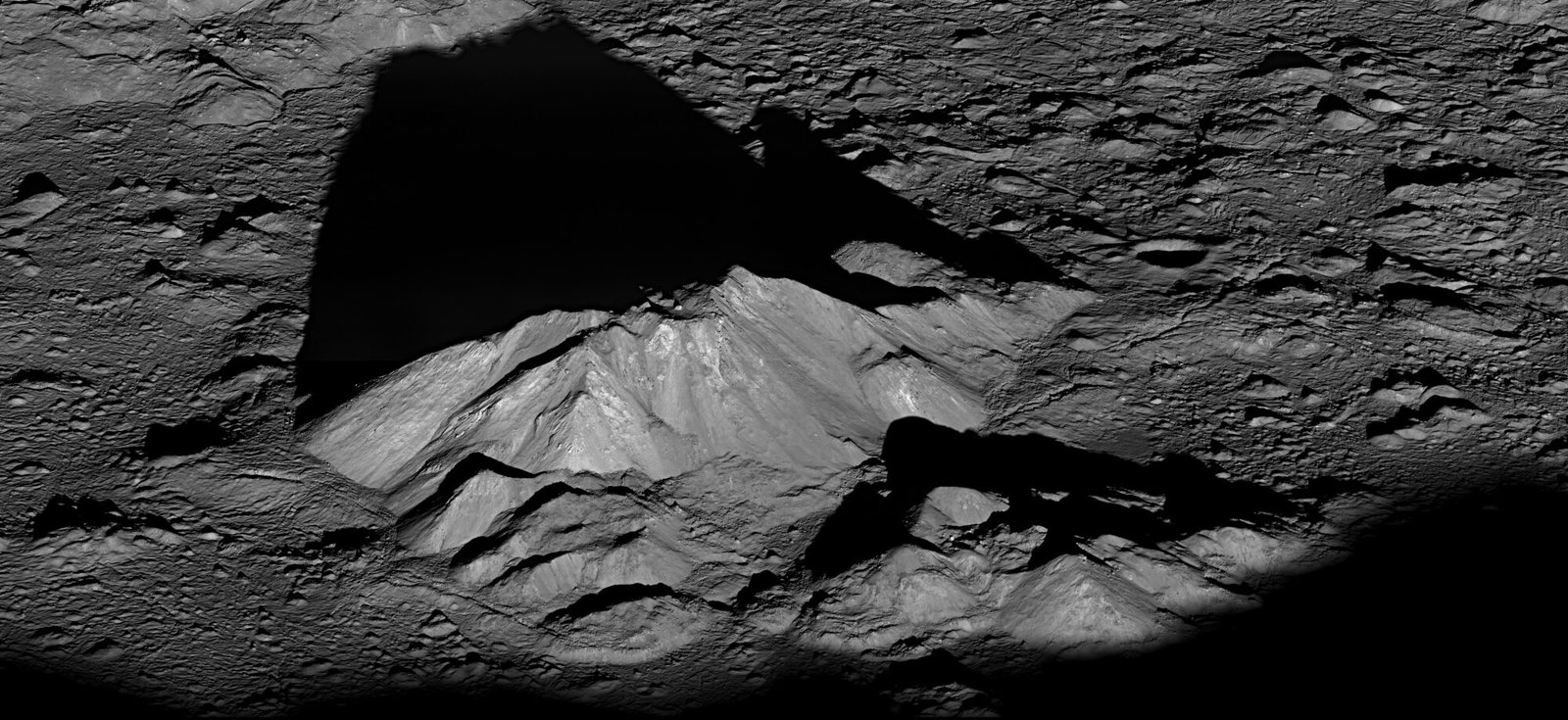
  • Crater-based navigation achieved metre-level lunar mapping accuracy

    Crater-based navigation achieved metre-level lunar mapping accuracy

    What the study found

    The study found that STELLA, an end-to-end crater-based navigation pipeline, can support long-duration lunar mapping with metre-level position accuracy and sub-degree attitude accuracy on average. The results were reported across a wide range of viewing angles, illumination conditions, and lunar latitudes.

    Why the authors say this matters

    The authors conclude that these results provide the first comprehensive assessment of crater-based navigation in a true lunar mapping setting. They also say the findings inform operational conditions that should be considered for future missions.

    What the researchers tested

    The researchers developed STELLA, which combines a mask R-CNN-based crater detector, a descriptor-less crater identification module, a robust perspective-n-crater pose solver, and a batch orbit determination back-end. They tested it using CRESENT+ and CRESENT-365, including CRESENT-365, a public dataset with 15,283 images rendered from high-resolution digital elevation models with SPICE-derived Sun angles and Moon motion.

    What worked and what didn't

    STELLA maintained metre-level position accuracy and sub-degree attitude accuracy on average in experiments on CRESENT+ and CRESENT-365. The abstract does not describe specific failure cases or detailed conditions where performance worsened, beyond noting that the tests covered wide ranges of viewing angles, illumination conditions, and lunar latitudes.

    What to keep in mind

    The abstract does not provide detailed limitations beyond the scope of the tested lunar mapping conditions. It also does not report performance for individual mission scenarios or explain which parts of the pipeline contributed most to the results.

    • STELLA is presented as the first end-to-end crater-based navigation pipeline for long-duration lunar mapping.
    • The system combines crater detection, crater identification, pose solving, and orbit determination.
    • CRESENT-365 is described as the first public dataset that emulates a year-long lunar mapping mission.
    • Across the tested datasets, STELLA averaged metre-level position accuracy and sub-degree attitude accuracy.
    • The abstract says the results help identify operational conditions for future missions.
  • TAIGHA measures trust in AI-generated health advice

    What the study found

    The study found that the Trust in AI-Generated Health Advice scale (TAIGHA) and its four-item short form (TAIGHA-S) are validated questionnaires for measuring users' state trust and distrust in AI-generated health advice. The full scale and short form showed strong psychometric properties.

    Why the authors say this matters

    The authors say this matters because people increasingly use AI tools, including large language models, to get health information and support health-related decisions. The study suggests that measuring trust in AI-generated health advice is important because advice-taking can have clinical, safety, and healthcare-system consequences.

    What the researchers tested

    The researchers developed theory-based questionnaire items using a generative AI approach and then validated them in several steps. These included automated validation, content validation with 10 domain experts, face validation with 30 lay participants, and psychometric validation with 385 UK participants who received AI-generated health advice for symptom assessment.

    What worked and what didn't

    After automated item reduction, 28 items were retained and then reduced to 10 based on expert ratings. The final TAIGHA scale showed excellent content validity, face validity, and model fit, and it had high internal consistency for both trust and distrust; the short form correlated highly with the full scale and also showed high reliability. The abstract does not describe any major elements that did not work, beyond the item-reduction process that narrowed the scale.

    What to keep in mind

    The psychometric validation was conducted with 385 participants in the U.K. receiving AI-generated health advice for symptom assessment, so the reported validation is specific to that sample and context. The abstract does not describe other limitations.

    • TAIGHA and TAIGHA-S were developed to measure trust and distrust in AI-generated health advice.
    • The study used automated validation plus expert, lay, and participant testing.
    • The final TAIGHA scale showed excellent content validity, face validity, and model fit.
    • Both trust and distrust subscales showed high internal consistency.
    • The short form correlated strongly with the full scale and was also reliable.
  • Entrywise transforms preserving sign regularity are characterized

    What the study found

    The paper provides complete characterizations of entrywise transforms that preserve sign regularity and strict sign regularity for rectangular matrices. It also covers the same preservation problem when a given sign pattern is required.

    Why the authors say this matters

    The authors place their results in the context of a long line of work on entrywise preservers, noting that sign regular and strictly sign regular matrices include totally positive and totally non-negative matrices as special cases. The study suggests this extends earlier classification results in a broader matrix setting.

    What the researchers tested

    The researchers studied entrywise functions acting on rectangular matrices. They focused on whether these functions preserve sign regularity and strict sign regularity, and on the same question under a prescribed sign pattern.

    What worked and what didn't

    The abstract states that the authors obtained complete characterizations for both preservation settings they considered. It does not list specific functions in the abstract, so no finer distinctions can be given here.

    What to keep in mind

    The available summary does not describe the detailed characterizations, proofs, or any limitations beyond the scope of rectangular matrices and the stated preservation classes. The abstract also does not report applications or examples.

    • The paper characterizes entrywise transforms that preserve sign regularity and strict sign regularity.
    • The results apply to rectangular matrices.
    • The authors also treat preservation with a given sign pattern.
    • Sign regular and strictly sign regular matrices include totally positive and totally non-negative matrices as special cases.
    • The abstract presents the results as complete characterizations.